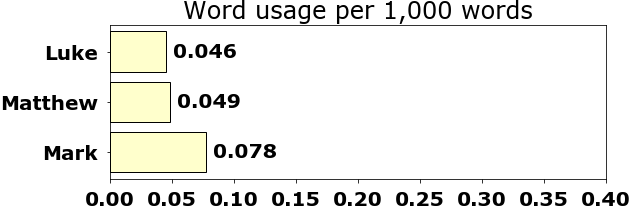
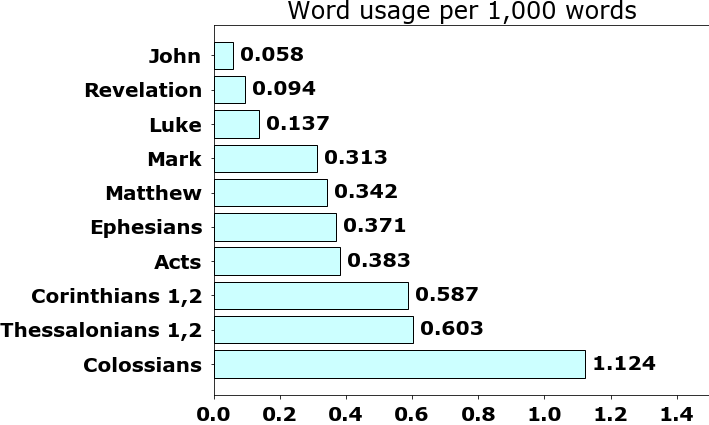
- *G942 *5 βάτος (bat'-os) : of uncertain derivation; a brier shrub:--bramble, bush.
- βατου *4
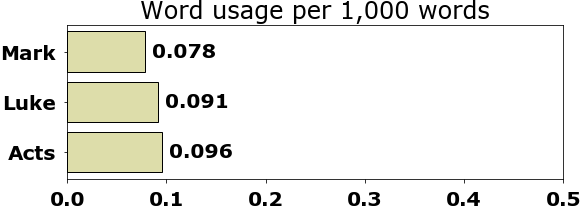
- Mark 12:26 ... of Moses, how in the bush God spake unto him, ...
- Luke 6:44 ... figs, nor of a bramble bush gather they grapes.
- Luke 20:37 ... Moses shewed at the bush, when he calleth the Lord ...
- Acts 7:30 ... in a flame of fire in a bush.
- βατω
- Acts 7:35 ... appeared to him in the bush.
22. Luke 20:37 Thorn bush
Luke 20:37 Now that the dead are raised, even Moses shewed at the bush, when he calleth the Lord the God of Abraham, and the God of Isaac, and the God of Jacob. [kjv]
οτι δε εγειρονται οι νεκροι και μωσης μωυσης εμηνυσεν επι της βατου ως λεγει κυριον τον θεον αβρααμ και τον θεον ισαακ και τον θεον ιακωβ [gnt]
The ancient Greek word
"βατός" ≈ "possible, accessible". Changing the accent syllable results in
"βάτος" ≈ "thorn bush" (grammatically feminine) or
"βάτος" ≈ "measure (Hebrew)" (grammatically masculine).
23. Luke 20:37
KJV: Now that the dead are raised, even Moses shewed at the bush, when he calleth the Lord the God of Abraham, and the God of Isaac, and the God of Jacob.
Greek: οτι δε εγειρονται οι νεκροι και μωσης μωυσης εμηνυσεν επι της βατου ως λεγει κυριον τον θεον αβρααμ και τον θεον ισαακ και τον θεον ιακωβ
24. Matthew 12:5 Sabbath daze
Matthew 12:5 Or have ye not read in the law, how that on the sabbath days the priests in the temple profane the sabbath, and are blameless? [kjv]
η ουκ ανεγνωτε εν τω νομω οτι τοις σαββασιν οι ιερεις εν τω ιερω το σαββατον βεβηλουσιν και αναιτιοι εισιν [gnt]
Here, the (first) "
Sabbaths" is
plural and the (second) "
Sabbath" is
singular. This exact word for "
Sabbath" is used only
one time by Jesus in Matthew and twice by Jesus in Mark (in the same verse).
"σαββατον" ≈ "Sabbath".
"βάτος" ≈ "thorn bush"
25. Mark 2:27-28 Sabbath
Mark 2:27 And he said unto them, The sabbath was made for man, and not man for the sabbath: [kjv]
και ελεγεν αυτοις το σαββατον δια τον ανθρωπον εγενετο και ουχ ο ανθρωπος δια το σαββατον [gnt]
2:28 Therefore the Son of man is Lord also of the sabbath. [kjv]
ωστε κυριος εστιν ο υιος του ανθρωπου και του σαββατου [gnt]
Mark, Peter's Gospel, relates the same ideas.
26. Mark 2:27
KJV: And he said unto them, The sabbath was made for man, and not man for the sabbath:
Greek: και ελεγεν αυτοις το σαββατον δια τον ανθρωπον εγενετο και ουχ ο ανθρωπος δια το σαββατον
27. Mark 2:28
KJV: Therefore the Son of man is Lord also of the sabbath.
Greek: ωστε κυριος εστιν ο υιος του ανθρωπου και του σαββατου
28. Matthew 12:5
KJV: Or have ye not read in the law, how that on the sabbath days the priests in the temple profane the sabbath, and are blameless?
Greek: η ουκ ανεγνωτε εν τω νομω οτι τοις σαββασιν οι ιερεις εν τω ιερω το σαββατον βεβηλουσιν και αναιτιοι εισιν
29. Greater than the greatest
Matthew 12:6 But I say unto you, That in this place is one greater than the temple. [kjv]
λεγω δε υμιν οτι του ιερου μειζων μειζον εστιν ωδε [gnt]
Greek word order:
I say then to you that of the temple greater is here.

Jesus (and others) on many occasions makes use of comparisons as to one entity being
"greater" or "
less" than another entity. One can be "
weighed in the balance".
This, however, is
not the same as "
not"
"greater" or "
not" "
less" which allows an "
equals". The Latin word
"maior" ≈ "more" and is the source of the English word
"major".
The Greek word translated as
"place" is that of
"here". Who or what is it that is
"greater"? For something to be
"greater" that to which it is compared is "
less".
30. Strongs - here
*G5602 *60 ὧδε (ho'-deh) : from an adverb form of G3592; in this same spot, i.e. here or hither:--here, hither, (in) this place, there.
 |
Words: ωδε=60
|
Revelation 13:18 Here is wisdom. Let him that hath understanding count the number of the beast: for it is the number of a man; and his number is Six hundred threescore and six. [kjv]
ωδε η σοφια εστιν ο εχων τον νουν ψηφισατω τον αριθμον του θηριου αριθμος γαρ ανθρωπου εστιν και ο αριθμος αυτου χξς εξακοσιοι εξηκοντα εξ [gnt]
31. Revelation 13:18
KJV: Here is wisdom. Let him that hath understanding count the number of the beast: for it is the number of a man; and his number is Six hundred threescore and six.
Greek: ωδε η σοφια εστιν ο εχων τον νουν ψηφισατω τον αριθμον του θηριου αριθμος γαρ ανθρωπου εστιν και ο αριθμος αυτου χξς εξακοσιοι εξηκοντα εξ
32. Matthew 12:6
Matthew 12:6 But I say unto you, That in this place is one greater than the temple. [kjv]
λεγω δε υμιν οτι του ιερου μειζων μειζον εστιν ωδε [gnt]
The Greek word translated as
"place",
not in the Greek, is that of
"in this way". The ancient Greek word
"ὧδε" ≈ "in this way, thus" and comes from
"ὅδε" ≈ "this". Of place it would be
"here", of time
"present".
A context appears to be needed for the word to mean
"here". The
KJV usually translates this word as
"here" so there are places where that context assumption may not fit well.
The Latin word
"hic" ≈ "this one". Another Latin meaning is
"hic" ≈ "here, at this place". Thus, the Greek, without appropriate context, appears to have to do with the
"way" or
"manner" while the Latin has to do with the
"place".
33. Matthew 12:6 Greater
Matthew 12:6 But I say unto you, That in this place is one greater than the temple. [kjv]
λεγω δε υμιν οτι του ιερου μειζων μειζον εστιν ωδε [gnt]
Greek word order:
I say then to you that of the temple greater is thus (in this manner)
Who is the (inferred)
something or
someone that is
"greater" than the
physical "
temple" or, perhaps, in the
actual text?
☐ Jesus
☐ each one with Jesus
This might be interpreted using the
one cookie rule.
34. Matthew 12:6
KJV: But I say unto you, That in this place is one greater than the temple.
Greek: λεγω δε υμιν οτι του ιερου μειζων μειζον εστιν ωδε
Latin: dico autem vobis quia templo maior est hic
35. Matthew 23:17 Fools
Matthew 23:17 Ye fools and blind: for whether is greater, the gold, or the temple that sanctifieth the gold? [kjv]
μωροι και τυφλοι τις γαρ μειζων εστιν ο χρυσος η ο ναος ο αγιαζων αγιασας τον χρυσον [gnt]
Jesus uses the idea of "
greater" in terms of
"gold" and the "
temple".
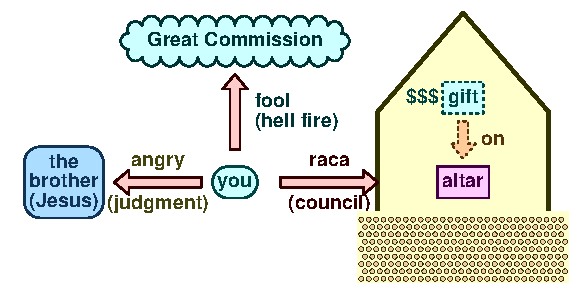
Jesus calls the religious elite
"fools" or, in Aramaic, "
raca". Is Jesus then "
liable" or in "
danger" of the "
council"? He will be at the crucifixion.
36. Matthew 12:7
Matthew 12:7 But if ye had known what this meaneth, I will have mercy, and not sacrifice, ye would not have condemned the guiltless. [kjv]
ει δε εγνωκειτε τι εστιν ελεον ελεος θελω και ου θυσιαν ουκ αν κατεδικασατε τους αναιτιους [gnt]
The Greek word translated as "
meaneth" is that of "
is" and is
not the Greek word for "
mean" as in "
meaning".
What Jesus says refers to the
"yoke" of
"compulsion".
First articulated by the prophet Amos.
Repeated by Isaiah.
Referenced by Jesus (several times).
Pointed out by Barnabas who connects the dots.
37. Amos 5:21-22 Feast days and holocausts
Amos 5:21 I hate, I despise your feast days, and I will not smell in your solemn assemblies. [kjv]
μεμισηκα απωσμαι εορτας υμων και ου μη οσφρανθω εν ταις πανηγυρεσιν υμων [lxx]
5:22 Though ye offer me burnt offerings and your meat offerings, I will not accept them: neither will I regard the peace offerings of your fat beasts. [kjv]
διοτι και εαν ενεγκητε μοι ολοκαυτωματα και θυσιας υμων ου προσδεξομαι αυτα και σωτηριου επιφανειας υμων ουκ επιβλεψομαι [lxx]
The English word
"holocaust" comes, through French and Latin, from the ancient Greek word
"ὁλόκαυστος " ≈ "wholly burnt" as in a
"burnt offering".
"ὅλος" ≈ "whole, entire" as in the first part of the English word "hologram".
"καίω" ≈ "to burn" and is related to the English word "caustic".
Note that a
hologram is a reality or physics-based phenomena while a
fractal (self-similar) object is a logic or information-based phenomena.
38. Barnabas 2.6 Yoke of compulsion
In the
Epistle of Barnabas, the writer explains at length, quoting verses such as found in Isaiah (and elsewhere), to point out that Jesus removes the "
yoke of compulsion".
English: Therefore he has abolished these things, in order that the new law of our Lord Jesus Christ which is free from the yoke of compulsion, might have its offering, one not made by humans. (Holmes, 2007, p. 383)
Greek: ταυτα ουν κατηργησεν, ινα ο καινος νομος του κυριου ὑμῶν Ἰησοῦ Χριστοῦ, ἄνευ ζυγοῦ ἀνάγκης, ὤν, μὴ ἀνθρωποποίητον ἔχῃ τὴν προσφοράν. Epistle of Barnabas [2.6]
Any religious establishment that profits from that "
yoke of compulsion" would not want the
Epistle of Barnabas included in the canon. Another disputed book, Hebrews, was included. Interesting, Hebrews includes many verses that appear to support a "
yoke of compulsion" while some verses in the
Epistle of Barnabas appear to be mistranslated (to provide continued support for not including it in the canon).
[Amos, Isaiah, Jesus (Matthew 23, etc.)]
39. Matthew 11:30 Yoke of compulsion
The lack of need for a religious hierarchy or
"yoke" of
"compulsion" as Barnabas explains, from the teachings of Jesus about the "
kingdom of heaven", would not have appealed to a human sand hierarchy interested in secular power.
Matthew 11:30 For my yoke is easy, and my burden is light. [kjv]
ο γαρ ζυγος μου χρηστος και το φορτιον μου ελαφρον εστιν [gnt]
The Greek for
"easy" is that of being
"useful" and is a play on words with the Greek word for
"Christ". The word
"yoke" means, literally,
"two going together".
The ancient Greek word "χρηστός" ≈ "useful, good".
The ancient Greek word "χριστός" ≈ "anointed one, Christ".
Without the play on words: My yoke is useful.
With the play on words: My yoke is Christ.
The word for
"burden" was also a word for
"tax". What is the
"tax" of the
"yoke" of "
compulsion"? Think "
altars" and "
sacrifices" and "
money tables".
"φόρτος" ≈ "load, cargo" and "φορτίον" ≈ "load, cargo" (diminutive)
"φόρος" ≈ "tribute, tax".
40. Matthew 12:3,5,7 Play on words
Matthew 12:3 … Have ye not read what David did, … [kjv]
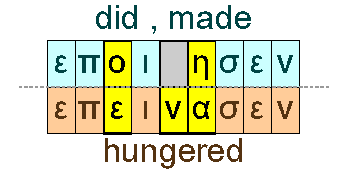
… ειπεν … ουκ ανεγνωτε … εποιησεν … επεινασεν … [gnt]
12:5 Or have ye not read in the law, how … [kjv]
… ουκ ανεγνωτε … νομω … σαββασιν … ιερεις … ιερω … σαββατον βεβηλουσιν … αναιτιοι … [gnt]
12:7 But if ye had known what this meaneth, … [kjv]
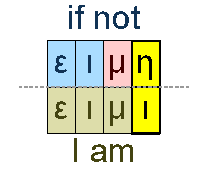
ει δε εγνωκειτε … εστιν …ελεος θελω … θυσιαν … κατεδικασατε … αναιτιους [gnt]
3, 5: ... ουκ ανεγνωτε ... , as ... not read ... or ... not unknown ... or ... know ... as in "did you know" (as in a somewhat condescending manner).
7: ... εγνωκειτε ... as ... known ... .
Note the play on words in verses 3 and 5 and reemphasized in verse 7, as in yes, that is what I meant. The alpha-negation prefix adds a consonant such as "
ν", in a manner similar to the movable
nu. This play on words works with the specific verb tense chosen by Jesus.
41. Matthew 12:7
KJV: But if ye had known what this meaneth, I will have mercy, and not sacrifice, ye would not have condemned the guiltless.
Greek: ει δε εγνωκειτε τι εστιν ελεον ελεος θελω και ου θυσιαν ουκ αν κατεδικασατε τους αναιτιους
42. Matthew 12:8 Master of the Sabbath
Matthew 12:8 For the Son of man is Lord even of the sabbath day. [kjv]
κυριος γαρ εστιν και του σαββατου ο υιος του ανθρωπου [gnt]
"κύριος" ≈ "lord or master" and is the source of the English word "church" as the "church" wants to be the "lord" or "master".
"κῦρος" ≈ "supremacy".
The Latin word "dominus" ≈ "master".
The English word
"lord" is from
"loaf guarder" or
"loaf ward". Try letting the "
f" disappear. The English word
"loaf" was the word for
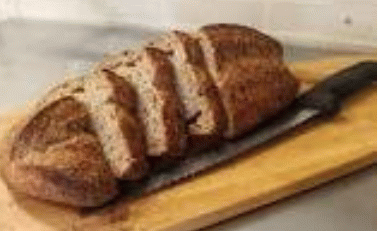
"bread",
43. The lord bred to loaf
Matthew 6:11 Give us this day our daily bread. [kjv]
τον αρτον ημων τον επιουσιον δος ημιν σημερον [gnt]
panem nostrum supersubstantialem da nobis hodie [v]
… pan … cada … dánoslo hoy. [es]
From the Old English, the word "
Lord" comes from the "
loaf protector" as in "
one who guards the loaves" from
"hlaf" (bread) and "
weard" (keeper or warder or guardian).
The word "
Lady" comes from the "
loaf kneader".
The Latin word
"panis" ≈ "bread" and is the source of the name of "
Panera Bread", literally "
Bread Bread".
44. Matthew 6:11 Panera Bread
Matthew 6:11 Give us this day our daily bread. [kjv]
τον αρτον ημων τον επιουσιον δος ημιν σημερον [gnt]
panem nostrum supersubstantialem da nobis hodie [v]
… pan … cada … dánoslo hoy. [es]
The Latin word
"pane" ≈ "bread" and is the source of the name of
"Panera Bread", literally
"Bread Bread". The Spanish word
"pan" ≈ "bread, loaf".
The English word
"lord" is from "
loaf guarder" or "
loaf ward" (try letting the "
f" disappear) where
"loaf" was the word for
"bread", like Latin "
f" in
"fabulor" ≈ "speak, talk" which became English
fable to Spanish "
h" in
"hablar" ≈ "speak".
Have you ever been to Punera Bread?
Bread puns happen when you yeast expect it. I tell puns because it is the way I was bred.
45. Matthew 12:8
KJV: For the Son of man is Lord even of the sabbath day.
Greek: κυριος γαρ εστιν και του σαββατου ο υιος του ανθρωπου
Latin: dominus est enim Filius hominis etiam sabbati
Wessex: Soðlice mannes sune is eac restes dayges hlaford.
Wycliffe: For mannus Sone is lord, yhe, of the sabat.
Tyndale: For ye sonne of man is lord even of ye saboth daye.
Luther: Des Menschen Sohn ist ein Herr auch über den Sabbat.
Slavonic: господь бо есть и субботы Сын Человеческий.
Russian: ибо Сын Человеческий есть господин и субботы.
Spanish: Porque el Hijo del Hombre es Señor aun del sábado.
46. Matthew 12:9-13 Healing on the Sabbath
Jesus heals on the sabbath and makes some interesting comments.
... more to be added ...
47. End of page