- *G2372 *18 θυμός (thoo-mos') : from G2380; passion (as if breathing hard):--fierceness, indignation, wrath. Compare G5590.
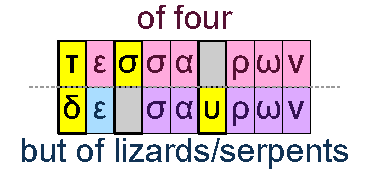
θυμου *10
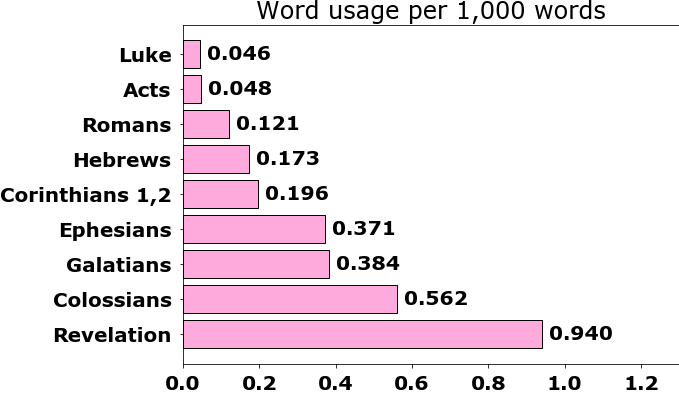
Luke 4:28 ... when they heard these things, were filled with wrath,
Acts 19:28 And when they heard these sayings, they were full of wrath, and cried out, saying, ...
Revelation 14:8 ... drink of the wine of the wrath of her fornication.
Revelation 14:10 The same shall drink of the wine of the wrath of God, which is poured out ...
Revelation 14:19 ... it into the great winepress of the wrath of God.
Revelation 15:7 ... golden vials full of the wrath of God, who liveth for ...
Revelation 16:1 ... and pour out the vials of the wrath of God upon the earth.
Revelation 16:19 ... unto her the cup of the wine of the fierceness of his wrath.
Revelation 18:3 ... have drunk of the wine of the wrath of her fornication, and ...
Revelation 19:15 ... he treadeth the winepress of the fierceness and wrath of Almighty God.
θυμος *3
Romans 2:8 ... but obey unrighteousness, indignation and wrath,
Ephesians 4:31 Let all bitterness, and wrath, and anger, and ...
Revelation 15:1 ... in them is filled up the wrath of God.
θυμον *3
Colossians 3:8 ... put off all these; anger, wrath, malice, blasphemy, filthy communication ...
Hebrews 11:27 ... Egypt, not fearing the wrath of the king: for he endured, ...
Revelation 12:12 ... you, having great wrath, because he knoweth that he hath ...
θυμοι *2
2 Corinthians 12:20 ... lest there be debates, envyings, wraths, strifes, backbitings, whisperings, ...
Galatians 5:20 ... hatred, variance, emulations, wrath, strife, seditions, heresies,
6. Revelation 15:1 Life and breath
Revelation 15:1 And I saw another sign in heaven, great and marvellous, seven angels having the seven last plagues; for in them is filled up the wrath of God. [kjv]
και ειδον αλλο σημειον εν τω ουρανω μεγα και θαυμαστον αγγελους επτα εχοντας πληγας επτα τας εσχατας οτι εν αυταις ετελεσθη ο θυμος του θεου [gnt]
… aliud signum … magnum … angelos septem … plagas septem novissimas … consummata … ira … [v]
The
ancient Greek word
"θυμός" ≈ "soul, life, breath, desire, passion, anger, wrath". The meaning of
"wrath" is one of many meanings of the word and not a primary meaning.
The
Latin word
"ire" ≈ "ire, anger, wrath" and is the source of the English word
"ire". This word is usually used to translate the Greek word.
7. Proverbs 20:30
8. Revelation 15:1 Sword strokes
Revelation 15:1 And I saw another sign in heaven, great and marvellous, seven angels having the seven last plagues; for in them is filled up the wrath of God. [kjv]
και ειδον αλλο σημειον εν τω ουρανω μεγα και θαυμαστον αγγελους επτα εχοντας πληγας επτα τας εσχατας οτι εν αυταις ετελεσθη ο θυμος του θεου [gnt]
… aliud signum … magnum … angelos septem … plagas septem novissimas … consummata … ira … [v]
The
ancient Greek word
"πληγή" ≈ "stroke from a sword or pike" but is translated as
"plague" in the
GNT (only in Revelation) and is the source, through Latin, of the English word
"plague". This is in contrast to the ancient Greek word
"βολή" ≈ "stroke from an arrow or missile".
The
Latin word
"plaga" ≈ "plague, misfortune, stroke/blow/cut/strike, wound/gash/injury" but could mean
"jokester". Have you ever encountered a
"plague" of "
jokesters"? If they are "
jokers" then go for the juggler (if they are not nice). Otherwise, hold the door for them. It could be a nice gesture.
9. Revelation 15:1 Flaming swords
Revelation 15:1 And I saw another sign in heaven, great and marvellous, seven angels having the seven last plagues; for in them is filled up the wrath of God. [kjv]
και ειδον αλλο σημειον εν τω ουρανω μεγα και θαυμαστον αγγελους επτα εχοντας πληγας επτα τας εσχατας οτι εν αυταις ετελεσθη ο θυμος του θεου [gnt]
… aliud signum … magnum … angelos septem … plagas septem novissimas … consummata … ira … [v]
The
ancient Greek word
"πληγή" ≈ "stroke from a sword or pike" but is translated as
"plague" in the
GNT (only in Revelation) and is the source of the English word
"plague".
Interestingly, it appears that one needs a "
flaming" "
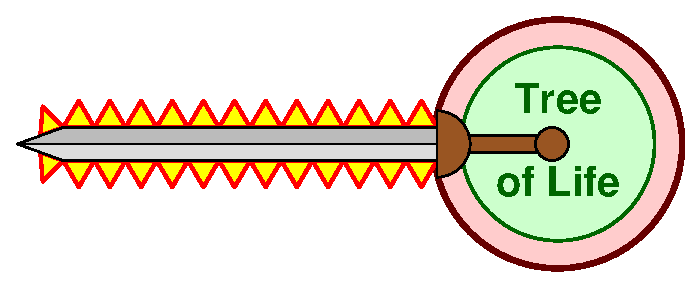
sword" to get back into the garden of life whose way is kept open by a "
flaming" "
sword".
10. Revelation 15:1 Similar sign
Revelation 15:1 And I saw another sign in heaven, great and marvellous, seven angels having the seven last plagues; for in them is filled up the wrath of God. [kjv]
και ειδον αλλο σημειον εν τω ουρανω μεγα και θαυμαστον αγγελους επτα εχοντας πληγας επτα τας εσχατας οτι εν αυταις ετελεσθη ο θυμος του θεου [gnt]
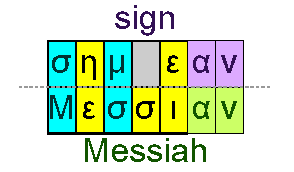
"σημεῖον" ≈ "mark, sign, omen, flag" and is related to the English word "semantic" as in "meaning" and the first part of the English word "semaphore". This word is sometimes translated as "miracle".
The "
mark" in "
mark" of the "
beast" is a different Greek word for "
mark".
This is "
another" "
similar"
"sign" and
not a "
different"
"sign" (
singular).
11. Revelation 15:1 Plagues and vials
Revelation 15:1 And I saw another sign in heaven, great and marvellous, seven angels having the seven last plagues; for in them is filled up the wrath of God. [kjv]
και ειδον αλλο σημειον εν τω ουρανω μεγα και θαυμαστον αγγελους επτα εχοντας πληγας επτα τας εσχατας οτι εν αυταις ετελεσθη ο θυμος του θεου [gnt]
… aliud signum … magnum … angelos septem … plagas septem novissimas … consummata … ira … [v]
There are "seven" "angels".
There are "seven" "plagues" or "strikes".
Why do the
"angels" need the
"vials" (in the next chapter) if they already have the
"plagues"? In the next chapter, the word
"plague" is not used for all of the
"vials".
The Greek word translated as
"filled" is that of
"completed" (for a
"purpose").
12. Revelation 15:1
KJV: And I saw another sign in heaven, great and marvellous, seven angels having the seven last plagues; for in them is filled up the wrath of God.
Greek: και ειδον αλλο σημειον εν τω ουρανω μεγα και θαυμαστον αγγελους επτα εχοντας πληγας επτα τας εσχατας οτι εν αυταις ετελεσθη ο θυμος του θεου
Latin: et vidi aliud signum in caelo magnum et mirabile angelos septem habentes plagas septem novissimas quoniam in illis consummata est ira Dei
13. Revelation 4:6
Revelation 4:6 And before the throne there was a sea of glass like unto crystal: and in the midst of the throne, and round about the throne, were four beasts full of eyes before and behind. [kjv]
και ενωπιον του θρονου ως θαλασσα υαλινη ομοια κρυσταλλω και εν μεσω του θρονου και κυκλω του θρονου τεσσαρα ζωα γεμοντα οφθαλμων εμπροσθεν και οπισθεν [gnt]
… tamquam mare vitreum … cristallo … [v]
The
ancient Greek word
"ὕαλος" ≈ "crystalline stone, glass" and contains the word
"αλός" ≈ "salt". The
Latin word
"vitreus" ≈ "glassy".
The
ancient Greek word
"κρύσταλλος" ≈ "ice, rock crystal" and is the source, through Latin and then French, of the English word
"crystal".
This is a strange description.
14. Revelation 15:2 Glassy sea
Revelation 15:2 And I saw as it were a sea of glass mingled with fire: and them that had gotten the victory over the beast, and over his image, and over his mark, and over the number of his name, stand on the sea of glass, having the harps of God. [kjv]
και ειδον ως θαλασσαν υαλινην μεμιγμενην πυρι και τους νικωντας εκ του θηριου και εκ της εικονος αυτου και εκ του χαραγματος αυτου εκ εκ του αριθμου του ονοματος αυτου εστωτας επι την θαλασσαν την υαλινην εχοντας κιθαρας του θεου [gnt]
What is meant by a
"glassy" "
sea"? It is mentioned only here and in Revelation 4:6. How would it be "
mingled" with "
fire"?
The
ancient Greek word
"ὕαλος" ≈ "crystalline stone, glass" and contains the word
"αλός" ≈ "salt".
15. Revelation 15:2 Latin
Revelation 15:2 And I saw as it were a sea of glass mingled with fire: and them that had gotten the victory over the beast, and over his image, and over his mark, and over the number of his name, stand on the sea of glass, having the harps of God. [kjv]
… tamquam mare vitreum mixtum igne … vicerunt bestiam … imaginem illius … numerum nominis … supra mare vitreum … citharas … [v]
The
Latin word
"vitreus" ≈ "glassy".
16. Revelation 15:2 Victory out of something
Revelation 15:2 And I saw as it were a sea of glass mingled with fire: and them that had gotten the victory over the beast, and over his image, and over his mark, and over the number of his name, stand on the sea of glass, having the harps of God. [kjv]
και ειδον ως θαλασσαν υαλινην μεμιγμενην πυρι και τους νικωντας εκ του θηριου και εκ της εικονος αυτου και εκ του χαραγματος αυτου εκ εκ του αριθμου του ονοματος αυτου εστωτας επι την θαλασσαν την υαλινην εχοντας κιθαρας του θεου [gnt]
The ancient Greek word
"νίκη" ≈ "victory" and is the basis of the name of the shoe company "
Nike". What is the status of this group having a
"victory"? Is it good or not good? From whose perspective?
Does your answer change when the Greek word translated as
"over" (English connotation) is that of the Greek word for
"out (of)"?
17. Revelation 15:2
Revelation 15:2 And I saw as it were a sea of glass mingled with fire: and them that had gotten the victory over the beast, and over his image, and over his mark, and over the number of his name, stand on the sea of glass, having the harps of God. [kjv]
και ειδον ως θαλασσαν υαλινην μεμιγμενην πυρι και τους νικωντας εκ του θηριου και εκ της εικονος αυτου και εκ του χαραγματος αυτου εκ εκ του αριθμου του ονοματος αυτου εστωτας επι την θαλασσαν την υαλινην εχοντας κιθαρας του θεου [gnt]
| English KJV |
Greek |
| over the beast |
out of the beast |
| over the image |
out of the image |
| over the number of the name |
out of the number of the name |
How does the idea of
"victory" change?
The
ancient Greek word
"εκ" ≈ "out (of)". To say
"on" or
"over" one would use
"ἐπί" ≈ "on, upon" as in the prefix of the English word
"epicenter" which is, literally, "
on the center".
18. Revelation 15:2 Guitar haps
Revelation 15:2 And I saw as it were a sea of glass mingled with fire: and them that had gotten the victory over the beast, and over his image, and over his mark, and over the number of his name, stand on the sea of glass, having the harps of God. [kjv]
και ειδον ως θαλασσαν υαλινην μεμιγμενην πυρι και τους νικωντας εκ του θηριου και εκ της εικονος αυτου και εκ του χαραγματος αυτου εκ εκ του αριθμου του ονοματος αυτου εστωτας επι την θαλασσαν την υαλινην εχοντας κιθαρας του θεου [gnt]
The
ancient Greek word
"κιθαρα" ≈ "stringed instrument" is the source, through Spanish, Arabic and Latin, of the English word
"guitar". A harp
guitar is a combination of a
harp and a
guitar.
A musical instrument lacks distinct semantics (meaning). Can one have a musical instrument of God without playing a clear semantics or meaning of what is played? Do modern churches ever do this? [goat song/singing]
19. Sheep and goats
In reality,
"sheep" are selective in what they will eat while
"goats" will eat most anything. In parables, a literal reality may or may not apply to the figurative or
code word meaning of the parable.
What do you get when you cross a goat and a sheep?
An animal that eats tin cans and gives back steel wool.
The
modern Greek word
"τράγος" (TRA-gos) ≈ "goat, billy goat", as an extension of the generic word for
"goat", and is the source of the modern Greek word for song,
"τραγούδι" (tra-GU-thee) ≈ "song" which is, literally, a "
goat song" (or a "
goat singer song"). The word is related to the English word
"tragedy".
Do some churches today give "
glory" to God using
"goat songs"? Would that be, in a sense, a
"tragedy"?
20. Revelation 15:2
KJV: And I saw as it were a sea of glass mingled with fire: and them that had gotten the victory over the beast, and over his image, and over his mark, and over the number of his name, stand on the sea of glass, having the harps of God.
Greek: και ειδον ως θαλασσαν υαλινην μεμιγμενην πυρι και τους νικωντας εκ του θηριου και εκ της εικονος αυτου και εκ του χαραγματος αυτου εκ εκ του αριθμου του ονοματος αυτου εστωτας επι την θαλασσαν την υαλινην εχοντας κιθαρας του θεου
Latin: et vidi tamquam mare vitreum mixtum igne et eos qui vicerunt bestiam et imaginem illius et numerum nominis eius stantes supra mare vitreum habentes citharas Dei
21. Revelation 15:3 Song of Moses
Revelation 15:3 And they sing the song of Moses the servant of God, and the song of the Lamb, saying, Great and marvellous are thy works, Lord God Almighty; just and true are thy ways, thou King of saints. [kjv]
και αδουσιν την ωδην μωσεως μωυσεως του δουλου του θεου και την ωδην του αρνιου λεγοντες μεγαλα και θαυμαστα τα εργα σου κυριε ο θεος ο παντοκρατωρ δικαιαι και αληθιναι αι οδοι σου ο βασιλευς των αγιων αιωνων [gnt]
… cantant canticum Mosi … canticum agni dicentes magna … mirabilia opera … iustae … verae … rex saeculorum [v]
What is the "
song" of "
Moses"? What is the "
song" of the "
Lamb"? What is the "
song" of the
"bird"? Might it be a
"swan" "
song"?
"ᾠδή" ≈ "song, ode" and is the source of the English word "ode".
"ὧδε" ≈ "in this way, thus" and comes from "ὅδε" ≈ "this".
The
TR (Textus Receptus) changes "
ages" to "
saints" at the end of the verse. Does this make a difference in the meaning? The Latin has the word for "
saints".
22. Song: I will sing unto the Lord
Exodus 15:1 Then sang Moses and the children of Israel this song unto the LORD, and spake, saying, I will sing unto the LORD, for he hath triumphed gloriously: the horse and his rider hath he thrown into the sea. [kjv]
The song "
I will sing unto the Lord" is from the 1800's and based on the song of Moses and Miriam in Exodus 15:1 and 15:21. The context is that of after the crossing of the Red Sea by the Israelites and the Egyptian army being destroyed. The melody is from an Israeli folk song.
23. Revelation 15:3 Lamb songs
Revelation 15:3 And they sing the song of Moses the servant of God, and the song of the Lamb, saying, Great and marvellous are thy works, Lord God Almighty; just and true are thy ways, thou King of saints. [kjv]
και αδουσιν την ωδην μωσεως μωυσεως του δουλου του θεου και την ωδην του αρνιου λεγοντες μεγαλα και θαυμαστα τα εργα σου κυριε ο θεος ο παντοκρατωρ δικαιαι και αληθιναι αι οδοι σου ο βασιλευς των αγιων αιωνων [gnt]
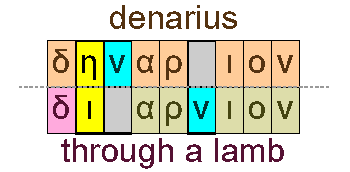
Abba reward.
|
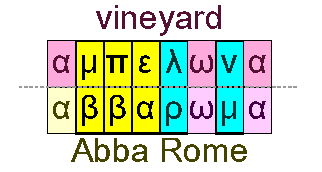
Which vineyard?
|
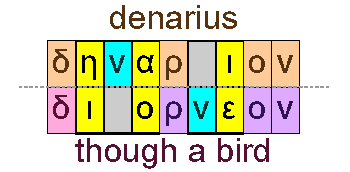
Rome reward.
|
What is the "
song" of the
"lamb"? Might it be
"through" a
"lamb"? Might it be a "
song" of a
"bird"? Might it be
"through" a
"bird"? What a "
tragic" "
goat" "
song"!
24. Revelation 15:3 Song of Hades
Revelation 15:3 And they sing the song of Moses the servant of God, and the song of the Lamb, saying, Great and marvellous are thy works, Lord God Almighty; just and true are thy ways, thou King of saints. [kjv]
και αδουσιν την ωδην μωσεως μωυσεως του δουλου του θεου και την ωδην του αρνιου λεγοντες μεγαλα και θαυμαστα τα εργα σου κυριε ο θεος ο παντοκρατωρ δικαιαι και αληθιναι αι οδοι σου ο βασιλευς των αγιων αιωνων [gnt]
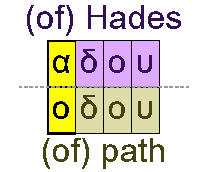
"ᾅδου" ≈ "Hades" (genitive singular) of "ᾅδης" ≈ "Hades".
"ὁδοῦ" ≈ "path" (genitive singular) of "ὁδός" ≈ "road, path, way".
Which "
horse" and which "
rider" might be "
thrown" into the "
sea"?
25. Revelation 15:3
KJV: And they sing the song of Moses the servant of God, and the song of the Lamb, saying, Great and marvellous are thy works, Lord God Almighty; just and true are thy ways, thou King of saints.
Greek: και αδουσιν την ωδην μωσεως μωυσεως του δουλου του θεου και την ωδην του αρνιου λεγοντες μεγαλα και θαυμαστα τα εργα σου κυριε ο θεος ο παντοκρατωρ δικαιαι και αληθιναι αι οδοι σου ο βασιλευς των αγιων αιωνων
Latin: et cantant canticum Mosi servi Dei et canticum agni dicentes magna et mirabilia opera tua Domine Deus omnipotens iustae et verae viae tuae rex saeculorum
26. Revelation 15:4 Fear
Revelation 15:4 Who shall not fear thee, O Lord, and glorify thy name? for thou only art holy: for all nations shall come and worship before thee; for thy judgments are made manifest. [kjv]
τις ου μη φοβηθη σε κυριε και δοξαση δοξασει το ονομα σου οτι μονος οσιος οτι παντα τα εθνη ηξουσιν και προσκυνησουσιν ενωπιον σου οτι τα δικαιωματα σου εφανερωθησαν [gnt]
The
ancient Greek word •
"φόβος" ≈ "fear, terror, awe".
Do modern churches (and the people of those churches) fear God?
Do modern churches (and the people in those churches) glorify the name of God?
Would a world-wide universal church all come together?
Why was Mary tongue-tied and at her wits end when the angel told her to "Fear not"?
Mary thought the angel said "Be a frayed knot". Not to string you along, but that was a tie for a knotty joke.
27. Revelation 15:4
KJV: Who shall not fear thee, O Lord, and glorify thy name? for thou only art holy: for all nations shall come and worship before thee; for thy judgments are made manifest.
Greek: τις ου μη φοβηθη σε κυριε και δοξαση δοξασει το ονομα σου οτι μονος οσιος οτι παντα τα εθνη ηξουσιν και προσκυνησουσιν ενωπιον σου οτι τα δικαιωματα σου εφανερωθησαν
28. Revelation 15:5
Revelation 15:5 And after that I looked, and, behold, the temple of the tabernacle of the testimony in heaven was opened: [kjv]
και μετα ταυτα ειδον και ιδου ηνοιγη ο ναος της σκηνης του μαρτυριου εν τω ουρανω [gnt]
… post haec vidi … apertum … templum tabernaculi testimonii … [v]
"ναός" ≈ "temple" and "σκηνή" ≈ "tent, theater stage" and is the source of the English word "scene".
The
"tabernacle" in the
LXX (Septuagint) used the Greek word for
"tent". Is it appropriate to translate the Greek word
"tent" as
"tabernacle"? The
Latin word
"tabernaculum" ≈ "tent, tabernacle".
It may not be good, for all in
"tents". The "
behold" in the
KJV (King James Version) is from the Latin and not in the Greek.
29. Revelation 15:5
KJV: And after that I looked, and, behold, the temple of the tabernacle of the testimony in heaven was opened:
Greek: και μετα ταυτα ειδον και ιδου ηνοιγη ο ναος της σκηνης του μαρτυριου εν τω ουρανω
Latin: et post haec vidi et ecce apertum est templum tabernaculi testimonii in caelo
30. Revelation 15:6 Clean and shining stone
Revelation 15:6 And the seven angels came out of the temple, having the seven plagues, clothed in pure and white linen, and having their breasts girded with golden girdles. [kjv]
και εξηλθαν εξηλθον οι επτα αγγελοι οι εχοντες τας επτα πληγας εκ του ναου ενδεδυμενοι λινον λιθον καθαρον και λαμπρον και περιεζωσμενοι περι τα στηθη ζωνας χρυσας [gnt]
… exierunt septem angeli … septem plagas … templo vestiti lapide mundo candido … praecincti circa pectora zonis aureis [v]
The
Latin has
"lapis" ≈ "stone". The
Greek has
"λίθος" ≈ "stone". The
TR changes this to "
linen".
The Greek word translated as "white" is that of "shining".
The Greek word translated as "pure" is that of "clean".
Here the Greek word for
"out (of)" is translated that way, instead of
"over" (as in a previous verse).
31. Revelation 17:4
Revelation 17:4 And the woman was arrayed in purple and scarlet colour, and decked with gold and precious stones and pearls, having a golden cup in her hand full of abominations and filthiness of her fornication: [kjv]
και η γυνη η ην περιβεβλημενη πορφυρα πορφυρουν και κοκκινω κοκκινον και κεχρυσωμενη χρυσω χρυσιω και λιθω τιμιω και μαργαριταις εχουσα χρυσουν ποτηριον χρυσουν εν τη χειρι αυτης γεμον βδελυγματων και ακαθαρτητος τα ακαθαρτα της πορνειας αυτης [gnt]
Are the (
not of high value)
"pearls" white, gray, or darkened to the point of being black? Might these
"pearls", not kept clean with "
salt", have been thrown before "
swine" and "
trampled"?
The
KJV translates as
"stones" what in the Greek is
singular. What is the
one "stone"?
Might it have been better to use the
"gold" and
"valued" "stone" to obtain some white
"pearls" (of great price)?
32. Revelation 15:6
Revelation 15:6 And the seven angels came out of the temple, having the seven plagues, clothed in pure and white linen, and having their breasts girded with golden girdles. [kjv]
και εξηλθαν εξηλθον οι επτα αγγελοι οι εχοντες τας επτα πληγας εκ του ναου ενδεδυμενοι λινον λιθον καθαρον και λαμπρον και περιεζωσμενοι περι τα στηθη ζωνας χρυσας [gnt]
Does this "
clothed" phrase refer to the
"angels" or to the
"plagues" or to the associated "
stones" or something else? That is, to what or whom does the (implied) "
they" refer?
Can a "
clean" and "
shining"
"stone" have a
"golden" "
belt" around it?
Greek:
... they (plural) clothed stone clean shining ...
Greek:
... and they (plural) girded around the breast belt gold.
In geology, some
stones can have gold bands through them.
33. Revelation 15:6
KJV: And the seven angels came out of the temple, having the seven plagues, clothed in pure and white linen, and having their breasts girded with golden girdles.
Greek: και εξηλθαν εξηλθον οι επτα αγγελοι οι εχοντες τας επτα πληγας εκ του ναου ενδεδυμενοι λινον λιθον καθαρον και λαμπρον και περιεζωσμενοι περι τα στηθη ζωνας χρυσας
Latin: et exierunt septem angeli habentes septem plagas de templo vestiti lapide mundo candido et praecincti circa pectora zonis aureis
34. Aristotle: Categories
The surviving works of Aristotle (about 2,500 pages of English) were put into a somewhat logical order and given references such as [1a]. Here are the very first few lines of those works.
English: Things are equivocally named when they have the name only in common, the definition (or statement of essence) corresponding with the name being different. (Loeb#325, p. 13)
Greek: Ὁμώνυμα λέγεται ὧν ὄνομα μόνον κοινόν, ὁ δὲ κατὰ τοὔνομα λόγος τῆς οὐσίας ἕτερος, Aristotle: Categories [1a]
Aristotle defines an
"equivocation", or
"names being equal", using the ancient Greek word
"ὁμώνυμος" ≈ "having the same name" from the following words.
"ὁμός" ≈ "same" and is related to the English word "same".
"ὄνυμα" ≈ "name" and is related to the English word "noun".
Aristotle continues with an example. Note: Aristotle used a lot of pronouns. The English fills these out.
35. Animal portraits
English: For instance, while a man and a portrait can be properly both be called animals, these are equivocally named. For they have the name only in common, the definition (or statements of essence) corresponding with the name being different. (Loeb#325, p. 13)
Greek: οἷον ζῷον ὅ τε ἄνθρωπος καὶ τὸ γεγραμμένον. τούτων γὰρ ὄνομα μόνον κοινόν, ὁ δὲ κατὰ τοὔνομα λόγος τῆς οὐσίας ἕτερος· ἂν γάρ τις ἀποδιδῷ τί ἐστιν αὐτῶν ἑκατέρῳ τὸ ζῴῳ εἶναι, ἴδιον ἑκατέρου λόγον ἀποδώσει. Aristotle: Categories [1a]
According to Aristotle, there are
two meanings for the same ancient Greek word
"ζῷον" ≈ "animal, portrait".
In Revelation 6, the
KJV uses the word "
beasts" but the Greek word that
"animal" speaks. Is it possible for a
"portrait" to
speak? How about a flat-screen with an
animation of an
"animal" that
appears as a
"portrait"?
36. Strongs - living creature
*G2226 *23 ζῶον (dzo'-on) : neuter of a derivative of G2198; a live thing, i.e. an animal:--beast.
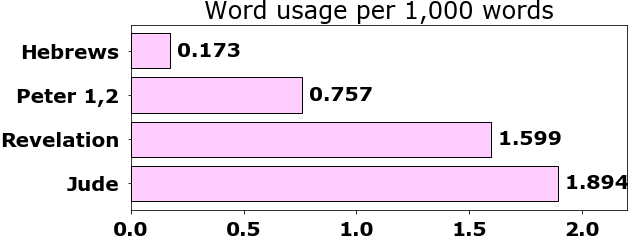 |
Words: ζωα=8 ζωον=4 ζωου=3 ζωων=8
|
The
ancient Greek word
"ζῷον" ≈ "animal, portrait".
Strongs
omits the possibility of this word meaning a
"portrait" and does not mention that a "
man" is a
"living creature" or
"animal"
37. Usage - living creature
- *G2226 *23 ζῶον (dzo'-on) : neuter of a derivative of G2198; a live thing, i.e. an animal:--beast.
- ζωων *8
- Hebrews 13:11 For the bodies of those beasts, whose blood ...
- Revelation 5:6 ... of the throne and of the four beasts, and in the midst ...
- Revelation 5:11 ... round about the throne and the beasts and the elders: and ...
- Revelation 6:1 ... one of the four beasts saying, Come and see.
- Revelation 6:6 ... in the midst of the four beasts say, A measure of wheat ...
- Revelation 7:11 ... about the elders and the four beasts, and fell before ...
- Revelation 14:3 ... and before the four beasts, and the elders: and ...
- Revelation 15:7 And one of the four beasts gave unto the seven angels ...
- ζωα *8
- 2 Peter 2:12 ... as natural brute beasts, made to be taken ...
- Jude 1:10 ... naturally, as brute beasts, in those things they corrupt themselves.
- Revelation 4:6 ... round about the throne, were four beasts full of eyes before ...
- Revelation 4:8 And the four beasts had each of them ...
- Revelation 4:9 And when those beasts give glory and ...
- Revelation 5:8 ... he had taken the book, the four beasts and four and twenty ...
- Revelation 5:14 And the four beasts said, Amen. And ...
- Revelation 19:4 ... elders and the four beasts fell down and worshipped ...
- ζωον *4
- Revelation 4:7 And the first beast was like a lion, and the second beast like a calf, ...
- ζωου *3
- Revelation 6:3 ... seal, I heard the second beast say, Come and see.
- Revelation 6:5 ... seal, I heard the third beast say, Come and ...
- Revelation 6:7 ... I heard the voice of the fourth beast say, Come and see.
38. Revelation 15:7 Four portraits
Revelation 15:7 And one of the four beasts gave unto the seven angels seven golden vials full of the wrath of God, who liveth for ever and ever. [kjv]
και εν εκ των τεσσαρων ζωων εδωκεν τοις επτα αγγελοις επτα φιαλας χρυσας γεμουσας του θυμου του θεου του ζωντος εις τους αιωνας των αιωνων [gnt]
… quattuor animalibus … septem angelis septem fialas … iracundiae … [v]
The Greek word translated as
"beast" is that of
"ζῷον" ≈ "animal, portrait". Each
"angel" has a
"plague" as a
"stone". The
"beast" or
"portrait" gives each
"angel" a
"golden" "
vial".
The "plague" might be the payload (e.g., ammunition).
The "vial" might be the delivery mechanism (weapon).
Until these are combined, nothing can happen from either one.
Greek:
... full of the spirit (not just wrath) of the living God into the ages of the ages.
39. Revelation 15:7
KJV: And one of the four beasts gave unto the seven angels seven golden vials full of the wrath of God, who liveth for ever and ever.
Greek: και εν εκ των τεσσαρων ζωων εδωκεν τοις επτα αγγελοις επτα φιαλας χρυσας γεμουσας του θυμου του θεου του ζωντος εις τους αιωνας των αιωνων
Latin: et unus ex quattuor animalibus dedit septem angelis septem fialas aureas plenas iracundiae Dei viventis in saecula saeculorum
40. Revelation 15:8 Glorious opinion
Revelation 15:8 And the temple was filled with smoke from the glory of God, and from his power; and no man was able to enter into the temple, till the seven plagues of the seven angels were fulfilled. [kjv]
και εγεμισθη ο ναος καπνου εκ της δοξης του θεου και εκ της δυναμεως αυτου και ουδεις ηδυνατο εδυνατο εισελθειν εις τον ναον αχρι τελεσθωσιν αι επτα πληγαι των επτα αγγελων [gnt]
The
ancient Greek word
"δόξα" ≈ "opinion, expectation" as in
"doxology". This word, after the Latin, is often translated as "
glory" as a narrowing of a
good opinion. [
doxx from
docs from Latin
teach related to Greek
opinion]
41. Revelation 15:8 Ready aim fire
Revelation 15:8 And the temple was filled with smoke from the glory of God, and from his power; and no man was able to enter into the temple, till the seven plagues of the seven angels were fulfilled. [kjv]
και εγεμισθη ο ναος καπνου εκ της δοξης του θεου και εκ της δυναμεως αυτου και ουδεις ηδυνατο εδυνατο εισελθειν εις τον ναον αχρι τελεσθωσιν αι επτα πληγαι των επτα αγγελων [gnt]
… templum fumo … virtute … poterat … templum … consummarentur septem plagae septem angelorum [v]
The
"angels" still have the
"plagues" but now, in addition, have
"vials". This leads directly to the next chapter.
The
ancient Greek word
"καπνός" ≈ "smoke" and comes from
"καπνίζω" ≈ "to smoke". The
modern Greek word
"καπνός" (ka-PNOS) ≈ "smoke".
42. Revelation 18:18
Revelation 18:18 And cried when they saw the smoke of her burning, saying, What city is like unto this great city ! [kjv]
και εκραζον ορωντες εκραξαν βλεποντες τον καπνον της πυρωσεως αυτης λεγοντες τις ομοια τη πολει τη μεγαλη [gnt]
The
ancient Greek word
"καπνός" ≈ "smoke" and comes from
"καπνίζω" ≈ "to smoke". The
modern Greek word
"καπνός" (ka-PNOS) ≈ "smoke".
43. Revelation 15:8
KJV: And the temple was filled with smoke from the glory of God, and from his power; and no man was able to enter into the temple, till the seven plagues of the seven angels were fulfilled.
Greek: και εγεμισθη ο ναος καπνου εκ της δοξης του θεου και εκ της δυναμεως αυτου και ουδεις ηδυνατο εδυνατο εισελθειν εις τον ναον αχρι τελεσθωσιν αι επτα πληγαι των επτα αγγελων
Latin: et impletum est templum fumo a maiestate Dei et de virtute eius et nemo poterat introire in templum donec consummarentur septem plagae septem angelorum
44. Revelation 16:1-21 A veiled look at the seven vile bowl judgments
Revelation 16:1 And I heard a great voice out of the temple saying to the seven angels, Go your ways, and pour out the vials of the wrath of God upon the earth. [kjv]
και ηκουσα φωνης μεγαλης φωνης εκ του ναου λεγουσης τοις επτα αγγελοις υπαγετε και εκχεατε εκχεετε τας επτα φιαλας του θυμου του θεου εις την γην [gnt]
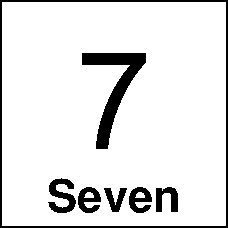
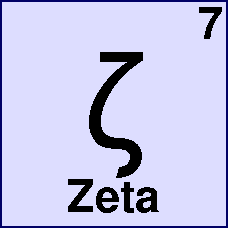
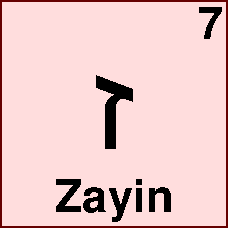
Revelation 16 contains what are called the
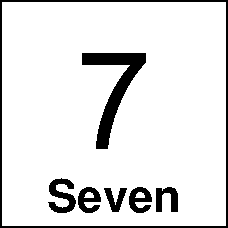
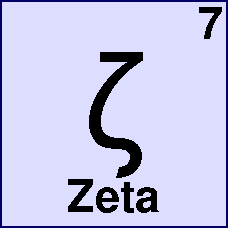
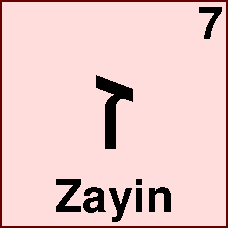
seven bowl or vial judgments. Interestingly, the Greek "
zeta" and the Hebrew "
zayin" have a shape similar to the Arabic
"seven".
The
ancient Greek word
"φιάλη" ≈ "round and shallow bowl, saucer, pan". This word appears
12 times in the
GNT,
all in Revelation, and (at least)
33 times in the
LXX.
A
vial could be thought of as a
veiled threat,
while it was actually a
vile vial.
[pare of dice]
45. End of page