Send
Close Add comments:
(status displays here)
Got it! This site "creationpie.org" uses cookies. You consent to this by clicking on "Got it!" or by continuing to use this website. Note: This appears on each machine/browser from which this site is accessed.
The coming of epiphany
1. The coming of epiphany
| +0=D25 |
+1=D26 |
+2=D27 |
+3=D28 |
+4=D29 |
+5=D30 |
+6=D31 |
| +7=J1 |
+8=J2 |
+9=J3 |
+10=J4 |
+11=J5 |
+12=J6 |
|
The Advent season is before Christmas. After Christmas, the twelve days of Christmas, with associated festivities, would ensue, until "
Epiphany" on
January 6.
Epiphany, also Theophany or Three Kings Day, celebrates the arrival of the Magi to visit baby Jesus. The "
Epiphany" is one aspect of what is more generally called "
Advent".
Both of the Greek words for "
Advent" and "
Epiphany" are used to refer to the
second coming of Jesus.
[Joy to the world]
2. Christmas decorations
3. Apparent light
4. Ephesians 5:13
KJV: But all things that are reproved are made manifest by the light@CZ(t=[ : for whatsoever doth make manifest is light. ])
Greek: τα δε παντα ελεγχομενα υπο του φωτος φανερουται παν γαρ το φανερουμενον φως εστιν
Latin: omnia autem quae arguuntur a lumine manifestantur omne enim quod manifestatur lumen est
The modern Greek word
"επιφανής" (eh-pee-fa-NEES) ≈ "illustrious, prominent"
5. Epiphany
Luke:
Luke 1:79 To give light to them that sit in darkness and in the shadow of death, to guide our feet into the way of peace. [kjv]
επιφαναι τοις εν σκοτει και σκια θανατου καθημενοις του κατευθυναι τους ποδας ημων εις οδον ειρηνης [gnt]
inluminare … [v]
Titus: (from Paul)
Titus 2:11 For the grace of God that bringeth salvation hath appeared to all men, [kjv]
επεφανη γαρ η χαρις του θεου η σωτηριος πασιν ανθρωποις [gnt]
apparuit … [v]
6. Luke 1:79
KJV: To give light to them that sit in darkness and in the shadow of death, to guide our feet into the way of peace.
Greek: επιφαναι τοις εν σκοτει και σκια θανατου καθημενοις του κατευθυναι τους ποδας ημων εις οδον ειρηνης
Latin: inluminare his qui in tenebris et in umbra mortis sedent ad dirigendos pedes nostros in viam pacis
Wessex: on-lihtan þam þe on þeostrum & on deaðes scade sitteð. ure fet to ge-reccenne on sibbe weig.
Wycliffe: To yyue liyt to hem that sitten in derknessis and in schadewe of deeth; to dresse oure feet in to the weie of pees.
7. Strongs - shine upon
- *G2014 *4 ἐπιφαίνω (ep-ee-fah'-ee-no) : from G1909 and G5316; to shine upon, i.e. become (literally) visible or (figuratively) known:--appear, give light.
- επεφανη *2
- Titus 2:11 ... of God that bringeth salvation hath appeared to all men,
- Titus 3:4 ... our Saviour toward man appeared,
- επιφαναι
- Luke 1:79 To give light to them that sit in darkness and ...
- επιφαινοντων
- Acts 27:20 ... in many days appeared, and no small ...
- *G2015 *0 ἐπιφάνεια (ep-if-an'-i-ah) : from G2016 ἐπιφανής; a manifestation, i.e. (specially) the advent of Christ (past or future):--appearing, brightness.
- επιφανειαν *3
- 2 Timothy 4:1 ... the dead at his appearing and his kingdom;
- 2 Timothy 4:8 ... also that love his appearing.
- Titus 2:13 ... hope, and the glorious appearing of the great God and ...
- επιφανειας *2
- 1 Timothy 6:14 ... without spot, unrebukeable, until the appearing of our Lord Jesus Christ:
- 2 Timothy 1:10 ... now made manifest by the appearing of our Saviour Jesus ...
- επιφανεια
- 2 Thessalonians 2:8 ... mouth, and shall destroy with the brightness of his coming:
- *G2016 ἐπιφανής (ep-if-an-ace') : from G2014 ἐπιφαίνω; conspicuous, i.e. (figuratively) memorable:--notable.
8. Usage - shine upon
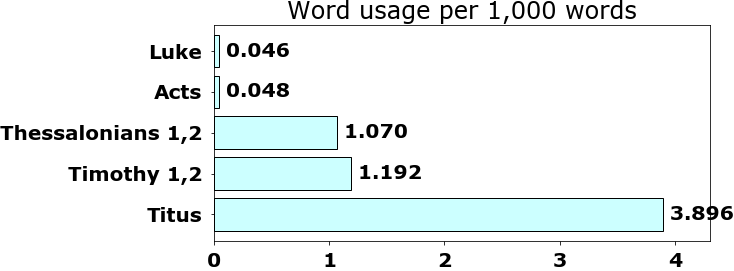 |
Words: επεφανη=2 επιφαινοντων επιφαναι επιφανεια επιφανειαν=3 επιφανειας=2
|
9. Titus 2:11
KJV: For the grace of God that bringeth salvation hath appeared to all men,
Greek: επεφανη γαρ η χαρις του θεου η σωτηριος πασιν ανθρωποις
Latin: apparuit enim gratia Dei salutaris omnibus hominibus
10. Second coming
Acts 2:20 The sun shall be turned into darkness, and the moon into blood, before that great and notable day of the Lord come: [kjv]
ο ηλιος μεταστραφησεται εις σκοτος και η σεληνη εις αιμα πριν η ελθειν την ημεραν κυριου την μεγαλην και επιφανη [gnt]
… manifestus [v]
Five times in the
GNT (Greek New Testament), the word for "
epiphany" is used for the
second coming of Jesus Christ.
A hymn, not written for Christmas, that is based on Psalms 98 and the second coming is "
Joy to the world".
11. Verse 1
Joy to the world, the Lord has come!
Let earth receive her King
Let every heart prepare Him room
And Heaven and nature sing
And Heaven and nature sing
And Heaven, and Heaven, and nature sing
12. Verse 4
He rules the world with truth and grace
And makes the nations prove
The glories of His righteousness
And wonders of His love
And wonders of His love
And wonders, wonders, of His love
13. Acts 2:20
KJV: The sun shall be turned into darkness, and the moon into blood, before that great and notable day of the Lord come:
Greek: ο ηλιος μεταστραφησεται εις σκοτος και η σεληνη εις αιμα πριν η ελθειν την ημεραν κυριου την μεγαλην και επιφανη
Latin: sol convertetur in tenebras et luna in sanguinem antequam veniat dies Domini magnus et manifestus
14. The quick and the dead
The Apostle's Creed contains the phrase "
to judge the living and the dead" which comes from 1 Peter 4:5 and 2 Timothy 4:1 and Acts 10:42.
1 Peter 4:5 Who shall give account to him that is ready to judge the quick and the dead. [kjv]
οι αποδωσουσιν λογον τω ετοιμως εχοντι κριναι κρινοντι ζωντας και νεκρους [gnt]
The quick are those that are living. So, the phrase the "
quick and the dead" refers to the "
living and the dead".
15. Old Testament
Numbers 6:25 The LORD make his face shine upon thee, and be gracious unto thee: [kjv]
επιφαναι κυριος το προσωπον αυτου επι σε και ελεησαι σε [lxx]
In the Old Testament, the Greek word for "
epiphany" is used for the manifestation of God to Israel.
16. Numbers 6:25
KJV: The LORD make his face shine upon thee, and be gracious unto thee:
Hebrew: יאר יהוה פניו אליך ויחנך׃
Greek: επιφαναι κυριος το προσωπον αυτου επι σε και ελεησαι σε
Latin: ostendat Dominus faciem suam tibi et misereatur tui
Wycliffe: the Lord schewe his face to thee, and haue mercy on thee;
Luther: Der Herr lasse sein Angesicht leuchten über dir und sei dir gnädig!
17. Pun: Antiochus Epiphanies
Acts 26:24 And as he thus spake for himself, Festus said with a loud voice, Paul, thou art beside thyself; much learning doth make thee mad. [kjv]
ταυτα δε αυτου απολογουμενου ο φηστος μεγαλη τη φωνη εφη φησιν μαινη παυλε τα πολλα σε γραμματα εις μανιαν περιτρεπει [gnt]
His original name was "
Mithridates". Daniel refers to him in prophecy about 400 years before, Jesus refers to him about 200 years later as a sign for the end times, and his actions led to the revolt and re-dedication of the temple during the Maccabean revolt and called "
Hanukkah".
The
ancient Greek word
"ἐπιφάνεια" ≈ "appearance, manifestation". The
modern Greek word
"επιφανής" (eh-pee-fa-NEES) ≈ "illustrious, prominent" as in appearance.
Since Antiochus Epiphanies was a mad tyrant who considered himself
"illustrious", a common pun (not to his face) was to call him "
Antiochus Epimanes", "
mad one" as in the
ancient Greek word
"μανία" ≈ "madness, frenzy" and is the English word
"mania" . The
modern Greek word
"μανία" (ma-NEE-a) ≈ "mania".
Thus, the play on words way goes between the phi «
φ» ("
f" sound) and the mu «
μ» ("
m" sound).
18. Theophany
The modern Greek word
"θεοφάνια" (theh-o-FA-nee-a) ≈ "Theophany" is the Greek term used for "
Epiphany".
In English, a "
Theophany" is often used to refer to an appearance of Jesus in the Old Testament - such as Joshua and the Battle of Jericho.
A "
Theophany" is in contrast to messages delivered by "
angels" as "
messengers" from God.
One can contrast "
angels" as "
messengers" with "
nanotechnology" in the field of "
robotics".
19. Touched by an angelic messenger
What does it mean to be "
touched by an angel"?
The TV series of the same name ran from 1994 to 2003, but is not really relevant here.
The English word
"angel" comes from the
ancient Greek word
"ἄγγελος" ≈ "messenger, one that announces".
In the Biblical context, the meaning is that of a
messenger from God and comes from the Hebrew word
"מלאך" (mal-ak) ≈ "angel" and is the root word for the prophet name "
Malachi".
Despite the song "
Hark the herald angels sing" the Bible records only one angel not singing at the birth of Jesus.
Other ancient cultures such as in Egypt, Babylon, Greece, etc., had supernatural beings that were messengers that brought news - good or bad. This idea appears to have been passed down from Adam, eventually to Noah, eventually to peoples and cultures dispersed from the Ark and the Tower of Babel, etc.
20. Verse 1
Hark! the herald angels sing , Glory to the new-born King
Peace on earth and mercy mild, God and sinners reconciled
Joyful, all ye nations, rise, Join the triumph of the skies
With angelic host proclaim, Christ is born in Bethlehem
Hark! the herald angels sing, Glory to the new-born King
21. End of page


 The ancient Greek word "φανερός" ≈ "visible, manifest".