Send
Close Add comments:
(status displays here)
Got it! This site "creationpie.org" uses cookies. You consent to this by clicking on "Got it!" or by continuing to use this website. Note: This appears on each machine/browser from which this site is accessed.
Luke 18:9-14 Pharisee and tax collector
1. Luke 18:9-14 Pharisee and tax collector
Luke 18:9 And he spake this parable unto certain which trusted in themselves that they were righteous, and despised others: [kjv]
ειπεν δε και προς τινας τους πεποιθοτας εφ εαυτοις οτι εισιν δικαιοι και εξουθενουντας τους λοιπους την παραβολην ταυτην [gnt]
18:10 Two men went up into the temple to pray; the one a Pharisee, and the other a publican. [kjv]
ανθρωποι δυο ανεβησαν εις το ιερον προσευξασθαι ο εις φαρισαιος και ο ετερος τελωνης [gnt]
This verse comes immediately after the parable of the unjust judge. Luke decides to call this story a "
parable" and has decided what it actually means.
Is this a "parable"?
Might there be another meaning?
Is Luke presumptuous to make this assertion?
2. Luke 18:9 Next parable
Luke 18:9 And he spake this parable unto certain which trusted in themselves that they were righteous, and despised others: [kjv]
ειπεν δε και προς τινας τους πεποιθοτας εφ εαυτοις οτι εισιν δικαιοι και εξουθενουντας τους λοιπους την παραβολην ταυτην [gnt]
Jesus then starts the next parable. Note again how Luke summarizes the verses that
follow this verse. This summary is a decision made by the writer (or someone else) as an inference of what Jesus said and may not be all that Jesus meant by what he said.
3. Luke 18:9 Word order
Luke 18:9 And he spake this parable unto certain which trusted in themselves that they were righteous, and despised others: [kjv]
ειπεν δε και προς τινας τους πεποιθοτας εφ εαυτοις οτι εισιν δικαιοι και εξουθενουντας τους λοιπους την παραβολην ταυτην [gnt]
The Greek and Latin have the word for "
parable" at the end of the verse, with "
others", and not at the beginning as does the
KJV (King James Version).
The Latin word
"ceteros" ≈ "other, remainder, rest" as in the English phrase
"et cetera" abbreviated as "
etc.".
4. Finally
Luke 18:9 And he spake this parable unto certain which trusted in themselves that they were righteous, and despised others: [kjv]
ειπεν δε και προς τινας τους πεποιθοτας εφ εαυτοις οτι εισιν δικαιοι και εξουθενουντας τους λοιπους την παραβολην ταυτην [gnt]
The ancient Greek word
"λοιπός" ≈ "remaining" as in "
others" and is from the ancient Greek word
"λείπω" ≈ "leave behind". It is the source of the ancient Greek word
"λοιπόν" ≈ "what remains, others" and is often translated as "
so" or "
therefore".
The use of this word by Paul in the
GNT (Greek New Testament) appears to have double meanings in some places. In some of those places it is translated as "
finally" in the
KJV and thus loses the double meaning.
 |
Details are left as a future topic.
|
5. Luke 18:9
KJV: And he spake this parable unto certain which trusted in themselves that they were righteous, and despised others:
Greek: ειπεν δε και προς τινας τους πεποιθοτας εφ εαυτοις οτι εισιν δικαιοι και εξουθενουντας τους λοιπους την παραβολην ταυτην
Latin: dixit autem et ad quosdam qui in se confidebant tamquam iusti et aspernabantur ceteros parabolam istam
Wycliffe: And he seide also to sum men, that tristiden in hem silf, as thei weren riytful, and dispiseden othere, this parable,
Luther: Er sagte aber zu etlichen, die sich selbst vermaßen, daß sie fromm wären, und verachteten die andern, ein solch Gleichnis:
6. Luke 18:10
KJV: Two men went up into the temple to pray; the one a Pharisee, and the other a publican.
Greek: ανθρωποι δυο ανεβησαν εις το ιερον προσευξασθαι ο εις φαρισαιος και ο ετερος τελωνης
7. Luke 18:11 Pharisee
Luke 18:11 The Pharisee stood and prayed thus with himself, God, I thank thee, that I am not as other men are, extortioners, unjust, adulterers, or even as this publican. [kjv]
ο φαρισαιος σταθεις ταυτα προς εαυτον ταυτα προσηυχετο ο θεος ευχαριστω σοι οτι ουκ ειμι ωσπερ οι λοιποι των ανθρωπων αρπαγες αδικοι μοιχοι η και ως ουτος ο τελωνης [gnt]
Jesus often associates the religious establishment with "
extortioners", "
unrighteous" (in God's eyes), "
adulterers", etc. This pharisee does not see himself this way.
8. Luke 18:11
KJV: The Pharisee stood and prayed thus with himself, God, I thank thee, that I am not as other men are, extortioners, unjust, adulterers, or even as this publican.
Greek: ο φαρισαιος σταθεις ταυτα προς εαυτον ταυτα προσηυχετο ο θεος ευχαριστω σοι οτι ουκ ειμι ωσπερ οι λοιποι των ανθρωπων αρπαγες αδικοι μοιχοι η και ως ουτος ο τελωνης
9. Luke 18:12 Weekly fast
Luke 18:12 I fast twice in the week, I give tithes of all that I possess. [kjv]
νηστευω δις του σαββατου αποδεκατω αποδεκατευω παντα οσα κτωμαι [gnt]
The
KJV translates as "
week" the Greek word for "
Sabbath".
10. Luke 18:12
KJV: I fast twice in the week, I give tithes of all that I possess.
Greek: νηστευω δις του σαββατου αποδεκατω αποδεκατευω παντα οσα κτωμαι
11. Strongs - tithe
*G586 *4 ἀποδεκατόω (ap-od-ek-at-o'-o) : from G575 and G1183; to tithe (as debtor or creditor):--(give, pay, take) tithe.
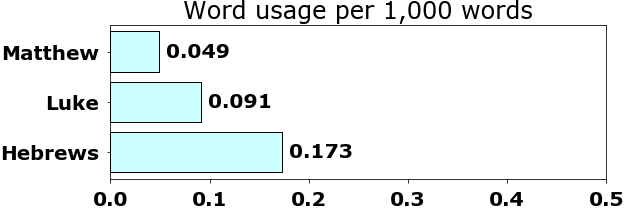 |
Words: αποδεκατευω αποδεκατουν αποδεκατουτε=2
|
12. Usage - tithe
- *G586 *4 ἀποδεκατόω (ap-od-ek-at-o'-o) : from G575 and G1183; to tithe (as debtor or creditor):--(give, pay, take) tithe.
- αποδεκατουτε *2
- Matthew 23:23 ... Pharisees, hypocrites! for ye pay tithe of mint and anise ...
- Luke 11:42 ... unto you, Pharisees! for ye tithe mint and rue ...
- αποδεκατευω
- Luke 18:12 I fast twice in the week, I give tithes of all that I possess.
- αποδεκατουν
- Hebrews 7:5 ... the office of the priesthood, have a commandment to take tithes of the people according to the law, ...
13. Luke 11:42
Luke 11:42 But woe unto you, Pharisees ! for ye tithe mint and rue and all manner of herbs, and pass over judgment and the love of God: these ought ye to have done, and not to leave the other undone. [kjv]
14. Luke 11:42
KJV: But woe unto you, Pharisees ! for ye tithe mint and rue and all manner of herbs, and pass over judgment and the love of God: these ought ye to have done, and not to leave the other undone.
Greek: αλλ αλλα ουαι υμιν τοις φαρισαιοις οτι αποδεκατουτε το ηδυοσμον και το πηγανον και παν λαχανον και παρερχεσθε την κρισιν και την αγαπην του θεου ταυτα δε εδει ποιησαι κακεινα μη αφιεναι παρειναι
15. Matthew 23:23 Tithe
Matthew 23:23 Woe unto you, scribes and Pharisees, hypocrites ! for ye pay tithe of mint and anise and cummin, and have omitted the weightier matters of the law, judgment, mercy, and faith: these ought ye to have done, and not to leave the other undone. [kjv]
ουαι υμιν γραμματεις και φαρισαιοι υποκριται οτι αποδεκατουτε το ηδυοσμον και το ανηθον και το κυμινον και αφηκατε τα βαρυτερα του νομου την κρισιν και τον ελεον το ελεος και την πιστιν ταυτα δε δε εδει ποιησαι κακεινα μη αφιεναι αφειναι [gnt]
The
KJV translates as "
omitted" and then "
undone" (at the end of the verse) the (same) Greek word that means "
forgive" or "
let go".
16. Luke 18:13 Publican
Luke 18:13 And the publican, standing afar off, would not lift up so much as his eyes unto heaven, but smote upon his breast, saying, God be merciful to me a sinner. [kjv]
και ο δε τελωνης μακροθεν εστως ουκ ηθελεν ουδε τους οφθαλμους επαραι εις τον ουρανον επαραι αλλ ετυπτεν εις το στηθος αυτου εαυτου λεγων ο θεος ιλασθητι μοι τω αμαρτωλω [gnt]
[type, stethoscope]
Is this actually a "
parable"?
How do we know that this story does not represent an actual situation?
17. Luke 18:13
KJV: And the publican, standing afar off, would not lift up so much as his eyes unto heaven, but smote upon his breast, saying, God be merciful to me a sinner.
Greek: και ο δε τελωνης μακροθεν εστως ουκ ηθελεν ουδε τους οφθαλμους επαραι εις τον ουρανον επαραι αλλ ετυπτεν εις το στηθος αυτου εαυτου λεγων ο θεος ιλασθητι μοι τω αμαρτωλω
18. Luke 18:14 High and low
Luke 18:14 I tell you, this man went down to his house justified rather than the other: for every one that exalteth himself shall be abased; and he that humbleth himself shall be exalted. [kjv]
λεγω υμιν κατεβη ουτος δεδικαιωμενος εις τον οικον αυτου η εκεινος παρ εκεινον οτι πας ο υψων εαυτον ταπεινωθησεται ο δε ταπεινων εαυτον υψωθησεται [gnt]
The "
this man" appears to be the "
tax collector" and not the "
pharisee".
Will the "exalted" and "abased" switch positions?
Will everyone be moved to the same position?
19. Luke 18:14
KJV: I tell you, this man went down to his house justified rather than the other: for every one that exalteth himself shall be abased; and he that humbleth himself shall be exalted.
Greek: λεγω υμιν κατεβη ουτος δεδικαιωμενος εις τον οικον αυτου η εκεινος παρ εκεινον οτι πας ο υψων εαυτον ταπεινωθησεται ο δε ταπεινων εαυτον υψωθησεται
20. End of page