- *G5020 *1 ταρταρόω (tar-tar-o'-o) : from Tartaros (the deepest abyss of Hades); to incarcerate in eternal torment:--cast down to hell.
- ταρταρωσας
- 2 Peter 2:4 ... that sinned, but cast them down to hell, and delivered them into chains ...
15. Halloween traditions
Many of these activities were related to divination of the future.
- apple bobbing
- nut roasting
- mirror-gazing
- dream interpretation
- future prediction
16. Games
Throughout Ireland and Britain, the household festivities included rituals and games intended to foretell one's future, especially regarding death and marriage. Apples and nuts were often used in these divination rituals. They included apple bobbing, nut roasting, scrying or mirror-gazing, pouring molten lead or egg whites into water, dream interpretation, and others. (Wikipedia)
17. Christian fasting tradition
Some Christians historically abstained from meat on All Hallows' Eve, a tradition reflected in the eating of certain vegetarian foods on this vigil day, including apples, potato pancakes, and soul cakes. (Wikipedia)
18. Irish folktale
On route home after a night's drinking, Jack encounters the Devil and tricks him into climbing a tree. A quick-thinking Jack etches the sign of the cross into the bark, thus trapping the Devil. Jack strikes a bargain that Satan can never claim his soul. After a life of sin, drink, and mendacity, Jack is refused entry to heaven when he dies. Keeping his promise, the Devil refuses to let Jack into hell and throws a live coal straight from the fires of hell at him. It was a cold night, so Jack places the coal in a hollowed out turnip to stop it from going out, since which time Jack and his lantern have been roaming looking for a place to rest. (Wikipedia)
19. Devil came down to Georgia
Part of the origin of the Halloween tradition reminds one of the country bluegrass song "
The devil went down to Georgia" made famous by the Charlie Daniels Band, released May 21, 1979.
Of course, it is ironic that being temped by the prospect of a golden fiddle may mean that the devil has already won.
Saying (of
snakes, etc.):
Heads I win. Tails you lose.
Here is a summary if the "
things" with which Jesus was tempted by the devil.
- wealth - stones to bread
- health - not be hurt
- power - rule kingdoms
20. Date
This was about two months
after the Three Mile Island nuclear accident (March 28, 1979). In information systems,
TMI = Too Much Information.
The then-new SP-UM church organ was installed (March 19, 1979).
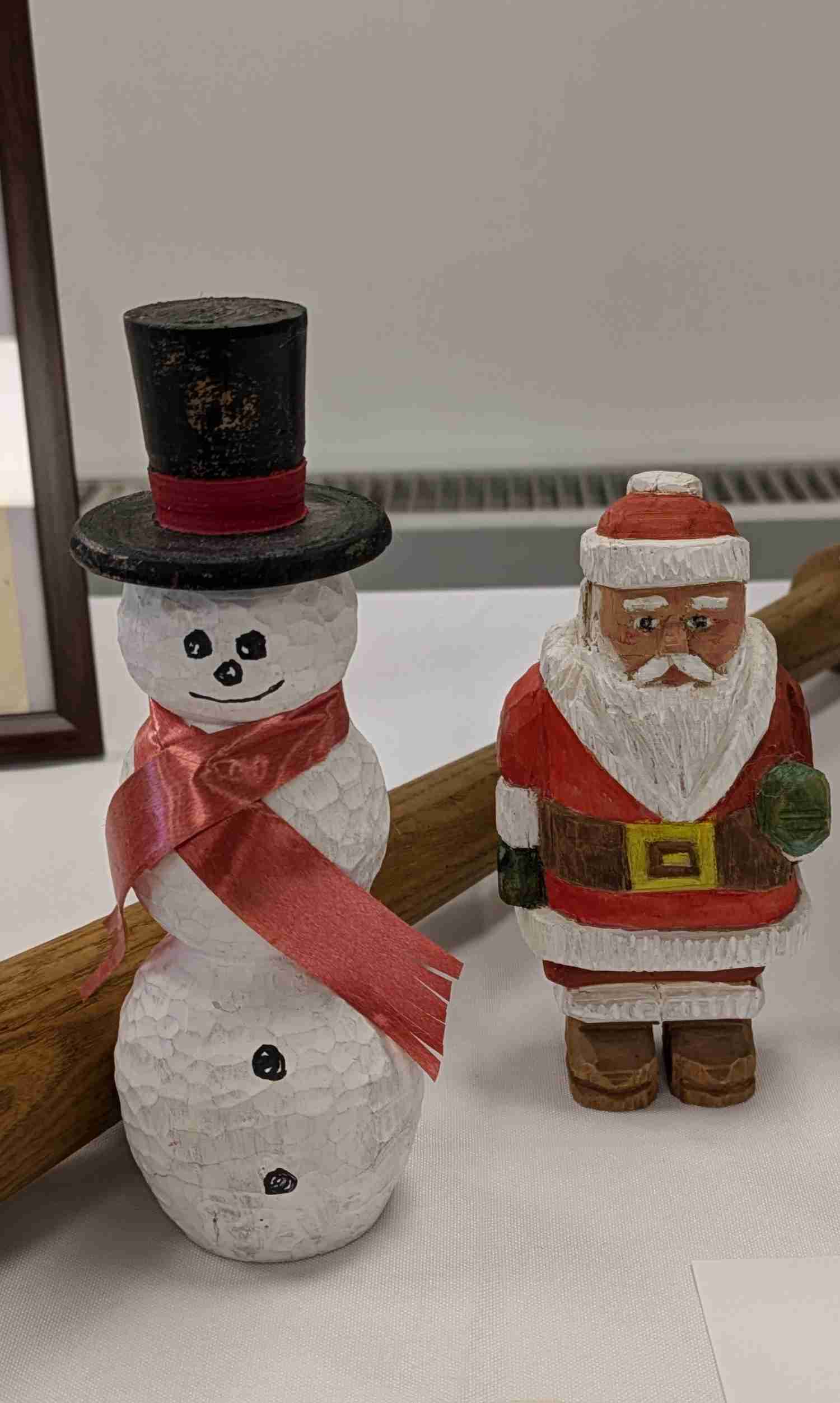
21. Pumpkins
Pumpkins from the New World were better suited for carving than turnips.
The orange color of the pumpkins and the greenish stems helped provide some of the traditional Halloween colors.
22. Gourd with intestines cut off
The use of the ancient Greek word
"κόλον" ≈ "intestine, food, fodder" or
"κόλος" ≈ "parts or extremities removed" is found four times in Jonah.
The ancient Greek word
"κολοκύνθη" ≈ "gourd". The vine-like nature of the plant appears like an "
intestine" or "
part" that is "
cut off" and from which the "
gourd" is removed.
Jonah 4:7 But God prepared a worm when the morning rose the next day, and it smote the gourd that it withered. [kjv]
και προσεταξεν ο θεος σκωληκι εωθινη τη επαυριον και επαταξεν την κολοκυνθαν και απεξηρανθη [lxx]
23. Latin and Modern Greek
Jonah 4:7 But God prepared a worm when the morning rose the next day, and it smote the gourd that it withered. [kjv]
και προσεταξεν ο θεος σκωληκι εωθινη τη επαυριον και επαταξεν την κολοκυνθαν και απεξηρανθη [lxx]
… vermem … percussit hederam … [v]
The Latin word
"hedera" ≈ "ivy". The Latin word
"percussit" ≈ "smote" and is the source of the English word
"percussion".
The modern Greek word
"κολοκυθιά" (ko-lo-kee-thee-A) ≈ "squash, pumpkin". Orange pumpkins came from the New World (Western Hemisphere).
24. Jonah 4:7
KJV: But God prepared a worm when the morning rose the next day, and it smote the gourd that it withered.
Hebrew: וימן האלהים תולעת בעלות השחר למחרת ותך את הקיקיון וייבש׃
Greek: και προσεταξεν ο θεος σκωληκι εωθινη τη επαυριον και επαταξεν την κολοκυνθαν και απεξηρανθη
Latin: et paravit Deus vermem ascensu diluculo in crastinum et percussit hederam et exaruit
25. Goethe
The famous German author and poet Johann Wolfgang von Goethe first published the color wheel in 1810 (in German, English edition in 1840) called the Theory of Colors. In German, "
Zur Farbenlehre".
26. Color wheel
Many holidays have opposite colors on the Goethe color wheel.
- Christmas: red and green
- Easter: purple and yellow
- Halloween: orange and green (not quite opposite)
- Blue and orange (any takers)
27. Colors and color models
Two
simple models (there are others), useful for depicting digital ideas, are the
RGB and
CMYK color models. Each model is correct. One way may be easier to work with for certain purposes.
28. Halloween candy
Halloween candy and "
Trick or Treat" time is a traditional part of Halloween.
Klein Chocolate Company was incorporated 1914. By 1922, 200 people were employed making 250,000 chocolate bars a day. A lot of local milk was used. The plant was sold to M&M Mars in 1970.
What became American Heritage Chocolate in 2013 was started in 2003 by M&M Mars and expanded over time.
29. Charlie Brown
The Charlie Brown special "
It's the great pumpkin, Charlie Brown" (1966) tended to get everyone ready for the start of the Christmas season (and the Thanksgiving special too).
30. Saul and the witch of Endor

Do you remember the story in the Bible about the witch at Endor?
31. Saul and the witch of Endor
The main story of Endor is Saul and the witch of Endor.
- Samuel is the prophet who anointed David King.
- Saul is (interim) King of Israel, tall and handsome.
- Saul has followed Samuel but not necessarily God.
- When Samuel dies, things get increasing worse for Saul.
32. Overview
- King Saul of Israel has lost Samuel the prophet on whom he relied for guidance from God.
- Saul is not right with God, seeks a "witch" to conjure up Samuel to ask for advice.
- Saul finds the "witch of Endor" who conjures up Samuel from the lower parts of the earth.
- The witch is surprised - this is a supernatural event to which she is not ready.
- Samuel scolds Saul for not going to and trusting God and proclaims the downfall of Saul.
- Saul is killed in battle the next day with the Philistines - whose descendants are the Palestinians of today.
33. History of Endor
Endor was a small village in Israel. A small village exists on that approximate site today.
It is mentioned in several places in the book of Joshua in the
OT (Old Testament) and is more well-known today from the story of Saul and the Witch of Endor in the last days of Saul as King of Israel at the time of David - who would become the new king.
34. Endor
35. Joshua 17:11
Endor, En-dor, or Dor, is mentioned in Joshua in the division of the land among the tribes of Israel.
KJV: And Manasseh had in Issachar and in Asher Beth-shean and her towns, and Ibleam and her towns, and the inhabitants of Dor and her towns, and the inhabitants of Endor and her towns, and the inhabitants of Taanach and her towns, and the inhabitants of Megiddo and her towns, even three countries.
Hebrew: ויהי למנשה ביששכר ובאשר בית שאן ובנותיה ויבלעם ובנותיה ואת ישבי דאר ובנותיה וישבי עין דר ובנתיה וישבי תענך ובנתיה וישבי מגדו ובנותיה שלשת הנפת׃
Greek: και εσται μανασση εν ισσαχαρ και εν ασηρ βαιθσαν και αι κωμαι αυτων και τους κατοικουντας δωρ και τας κωμας αυτης και τους κατοικουντας μαγεδδω και τας κωμας αυτης και το τριτον της ναφετα και τας κωμας αυτης
36. Judges 1:27
KJV: Neither did Manasseh drive out the inhabitants of Beth-shean and her towns, nor Taanach and her towns, nor the inhabitants of Dor and her towns, nor the inhabitants of Ibleam and her towns, nor the inhabitants of Megiddo and her towns: but the Canaanites would dwell in that land.
Hebrew: ולא הוריש מנשה את בית שאן ואת בנותיה ואת תענך ואת בנתיה ואת ישב דור ואת בנותיה ואת יושבי יבלעם ואת בנתיה ואת יושבי מגדו ואת בנותיה ויואל הכנעני לשבת בארץ הזאת׃
Greek: και ουκ εκληρονομησεν μανασσης την βαιθσαν η εστιν σκυθων πολις ουδε τας θυγατερας αυτης ουδε τα περισπορια αυτης ουδε την εκθανααδ και τας θυγατερας αυτης ουδε τους κατοικουντας δωρ και τας θυγατερας αυτης και τους κατοικουντας βαλααμ και τας θυγατερας αυτης και τους κατοικουντας μαγεδων και τας θυγατερας αυτης ουδε τους κατοικουντας ιεβλααμ ουδε τας θυγατερας αυτης και ηρξατο ο χαναναιος κατοικειν εν τη γη ταυτη
Latin: Manasses quoque non delevit Bethsan et Thanach cum viculis suis et habitatores Dor et Ieblaam et Mageddo cum viculis suis coepitque Chananeus habitare cum eis
Wycliffe: Also Manasses dide not awei Bethsan and Thanael with her townes, and the dwelleris of Endor, and Geblaam and Magedo with her townes; and Cananei bigan to dwelle with hem.
37. Psalms 83:9
KJV: Do unto them as unto the Midianites; as to Sisera, as to Jabin, at the brook of Kison:
Hebrew: עשה להם כמדין כסיסרא כיבין בנחל קישון׃
Greek: ποιησον αυτοις ως τη μαδιαμ και τω σισαρα ως ο ιαβιν εν τω χειμαρρω κισων
Latin: fac illis sicut Madian et Sisarae sicut Iabin in torrente Cison
38. Psalms 83:10
KJV: Which perished at Endor: they became as dung for the earth.
Hebrew: נשמדו בעין דאר היו דמן לאדמה׃
Greek: εξωλεθρευθησαν εν αενδωρ εγενηθησαν ωσει κοπρος τη γη
Latin: contriti sunt in Aendor fuerunt quasi sterquilinium terrae
Geneva: They perished at En-dor, and were dung for the earth.
39. Saul and the Witch of Endor
40. 1 Samuel 3 Calling of Samuel
1 Samuel 3:10 And the LORD came, and stood, and called as at other times, Samuel, Samuel. Then Samuel answered, Speak; for thy servant heareth. [kjv]
και ηλθεν κυριος και κατεστη και εκαλεσεν αυτον ως απαξ και απαξ και ειπεν σαμουηλ λαλει οτι ακουει ο δουλος σου [lxx]
… שמואל שמואל … שמואל … [he]
Samuel was called by God as a child,
four times until the message got through. And
each time God had to say his name
twice.
Wives should realize that this is not uncommon in men. To get their attention, you may need to say their name twice
and you may need to do it multiple times.
In fact, God not only had to call Moses twice, but had to light a fire to get his attention.
41. 1 Samuel 3:8-9 Context
1 Samuel 3:8 And the LORD called Samuel again the third time. And he arose and went to Eli, and said, Here am I; for thou didst call me. And Eli perceived that the LORD had called the child. [kjv]
ויסף יהוה קרא שמואל בשלשית ויקם וילך אל עלי ויאמר הנני כי קראת לי ויבן עלי כי יהוה קרא לנער׃ [he]
3:9 Therefore Eli said unto Samuel, Go, lie down: and it shall be, if he call thee, that thou shalt say, Speak, LORD; for thy servant heareth. So Samuel went and lay down in his place. [kjv]
… Samuel … [wy]
ויאמר עלי לשמואל לך שכב והיה אם יקרא אליך ואמרת דבר יהוה כי שמע עבדך וילך שמואל וישכב במקומו׃ [he]
42. Strongs - Samuel
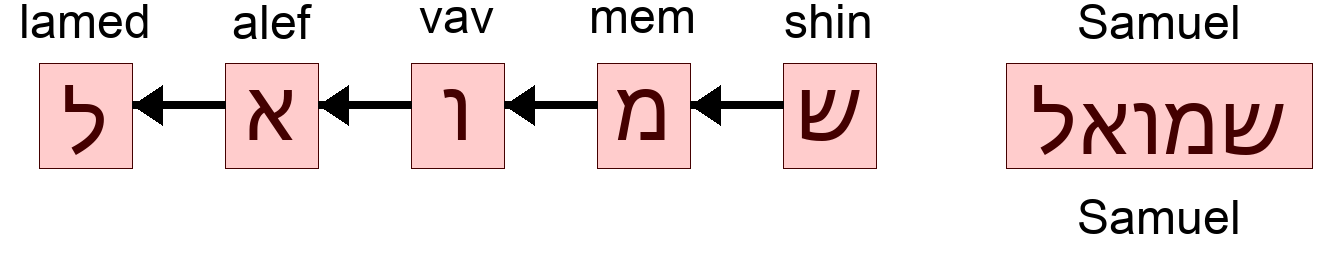
- *H8050 שְׁמוּאֵל (sehm-oo-ale') : from the passive participle of H8085 and H410; heard of God; Shemuel, the name of three Israelites:--Samuel, Shemuel.
The Hebrew word
"שמואל" ≈ "Samuel".
43. 1 Samuel 3:8
KJV: And the LORD called Samuel again the third time. And he arose and went to Eli, and said, Here am I; for thou didst call me. And Eli perceived that the LORD had called the child.
Hebrew: ויסף יהוה קרא שמואל בשלשית ויקם וילך אל עלי ויאמר הנני כי קראת לי ויבן עלי כי יהוה קרא לנער׃
Greek: και προσεθετο κυριος καλεσαι σαμουηλ εν τριτω και ανεστη και επορευθη προς ηλι και ειπεν ιδου εγω οτι κεκληκας με και εσοφισατο ηλι οτι κυριος κεκληκεν το παιδαριον
44. 1 Samuel 3:9
KJV: Therefore Eli said unto Samuel, Go, lie down: and it shall be, if he call thee, that thou shalt say, Speak, LORD; for thy servant heareth. So Samuel went and lay down in his place.
Hebrew: ויאמר עלי לשמואל לך שכב והיה אם יקרא אליך ואמרת דבר יהוה כי שמע עבדך וילך שמואל וישכב במקומו׃
Greek: και ειπεν αναστρεφε καθευδε τεκνον και εσται εαν καλεση σε και ερεις λαλει κυριε οτι ακουει ο δουλος σου και επορευθη σαμουηλ και εκοιμηθη εν τω τοπω αυτου
Wycliffe: and seide, Lo! Y; for thou clepidist me. Therfor Heli vndirstood, that the Lord clepide the child; and Heli seide to Samuel, Go and slepe; and if he clepith thee aftirward, thou schalt seie, Speke thou, Lord, for thi seruaunt herith. Therfor Samuel yede and slepte in his place.
45. 1 Samuel 3:10
KJV: And the LORD came, and stood, and called as at other times, Samuel, Samuel. Then Samuel answered, Speak; for thy servant heareth.
Hebrew: ויבא יהוה ויתיצב ויקרא כפעם בפעם שמואל שמואל ויאמר שמואל דבר כי שמע עבדך׃
Greek: και ηλθεν κυριος και κατεστη και εκαλεσεν αυτον ως απαξ και απαξ και ειπεν σαμουηλ λαλει οτι ακουει ο δουλος σου
46. 1 Samuel 28:1 Saul and the Witch of Endor
1 Samuel 28:1 And it came to pass in those days, that the Philistines gathered their armies together for warfare, to fight with Israel. And Achish said unto David, Know thou assuredly, that thou shalt go out with me to battle, thou and thy men. [kjv]
47. 1 Samuel 28:1
KJV: And it came to pass in those days, that the Philistines gathered their armies together for warfare, to fight with Israel. And Achish said unto David, Know thou assuredly, that thou shalt go out with me to battle, thou and thy men.
Hebrew: ויהי בימים ההם ויקבצו פלשתים את מחניהם לצבא להלחם בישראל ויאמר אכיש אל דוד ידע תדע כי אתי תצא במחנה אתה ואנשיך׃
Greek: και εγενηθη εν ταις ημεραις εκειναις και συναθροιζονται αλλοφυλοι εν ταις παρεμβολαις αυτων εξελθειν πολεμειν μετα ισραηλ και ειπεν αγχους προς δαυιδ γινωσκων γνωσει οτι μετ εμου εξελευσει εις πολεμον συ και οι ανδρες σου
48. 1 Samuel 28:2
KJV: And David said to Achish, Surely thou shalt know what thy servant can do. And Achish said to David, Therefore will I make thee keeper of mine head for ever.
Hebrew: ויאמר דוד אל אכיש לכן אתה תדע את אשר יעשה עבדך ויאמר אכיש אל דוד לכן שמר לראשי אשימך כל הימים׃
Greek: και ειπεν δαυιδ προς αγχους ουτω νυν γνωσει α ποιησει ο δουλος σου και ειπεν αγχους προς δαυιδ ουτως αρχισωματοφυλακα θησομαι σε πασας τας ημερας
49. 1 Samuel 28:3
KJV: Now Samuel was dead, and all Israel had lamented him, and buried him in Ramah, even in his own city. And Saul had put away those that had familiar spirits, and the wizards, out of the land.
Hebrew: ושמואל מת ויספדו לו כל ישראל ויקברהו ברמה ובעירו ושאול הסיר האבות ואת הידענים מהארץ׃
Greek: και σαμουηλ απεθανεν και εκοψαντο αυτον πας ισραηλ και θαπτουσιν αυτον εν αρμαθαιμ εν πολει αυτου και σαουλ περιειλεν τους εγγαστριμυθους και τους γνωστας απο της γης
50. 1 Samuel 28:4
KJV: And the Philistines gathered themselves together, and came and pitched in Shunem: and Saul gathered all Israel together, and they pitched in Gilboa.
Hebrew: ויקבצו פלשתים ויבאו ויחנו בשונם ויקבץ שאול את כל ישראל ויחנו בגלבע׃
Greek: και συναθροιζονται οι αλλοφυλοι και ερχονται και παρεμβαλλουσιν εις σωμαν και συναθροιζει σαουλ παντα ανδρα ισραηλ και παρεμβαλλουσιν εις γελβουε
51. 1 Samuel 28:5
KJV: And when Saul saw the host of the Philistines, he was afraid, and his heart greatly trembled.
Hebrew: וירא שאול את מחנה פלשתים וירא ויחרד לבו מאד׃
Greek: και ειδεν σαουλ την παρεμβολην των αλλοφυλων και εφοβηθη και εξεστη η καρδια αυτου σφοδρα
52. 1 Samuel 28:6
KJV: And when Saul enquired of the LORD, the LORD answered him not, neither by dreams, nor by Urim, nor by prophets.
Hebrew: וישאל שאול ביהוה ולא ענהו יהוה גם בחלמות גם באורים גם בנביאם׃
Greek: και επηρωτησεν σαουλ δια κυριου και ουκ απεκριθη αυτω κυριος εν τοις ενυπνιοις και εν τοις δηλοις και εν τοις προφηταις
53. 1 Samuel 28:7
KJV: Then said Saul unto his servants, Seek me a woman that hath a familiar spirit, that I may go to her, and enquire of her. And his servants said to him, Behold, there is a woman that hath a familiar spirit at Endor.
Hebrew: ויאמר שאול לעבדיו בקשו לי אשת בעלת אוב ואלכה אליה ואדרשה בה ויאמרו עבדיו אליו הנה אשת בעלת אוב בעין דור׃
Greek: και ειπεν σαουλ τοις παισιν αυτου ζητησατε μοι γυναικα εγγαστριμυθον και πορευσομαι προς αυτην και ζητησω εν αυτη και ειπαν οι παιδες αυτου προς αυτον ιδου γυνη εγγαστριμυθος εν αενδωρ
54. 1 Samuel 28:8
KJV: And Saul disguised himself, and put on other raiment, and he went, and two men with him, and they came to the woman by night: and he said, I pray thee, divine unto me by the familiar spirit, and bring me him up, whom I shall name unto thee.
Hebrew: ויתחפש שאול וילבש בגדים אחרים וילך הוא ושני אנשים עמו ויבאו אל האשה לילה ויאמר קסומי נא לי באוב והעלי לי את אשר אמר אליך׃
Greek: και συνεκαλυψατο σαουλ και περιεβαλετο ιματια ετερα και πορευεται αυτος και δυο ανδρες μετ αυτου και ερχονται προς την γυναικα νυκτος και ειπεν αυτη μαντευσαι δη μοι εν τω εγγαστριμυθω και αναγαγε μοι ον εαν ειπω σοι
Latin: mutavit ergo habitum suum vestitusque est aliis vestimentis abiit ipse et duo viri cum eo veneruntque ad mulierem nocte et ait divina mihi in pythone et suscita mihi quem dixero tibi
55. 1 Samuel 28:9
KJV: And the woman said unto him, Behold, thou knowest what Saul hath done, how he hath cut off those that have familiar spirits, and the wizards, out of the land: wherefore then layest thou a snare for my life, to cause me to die?
Hebrew: ותאמר האשה אליו הנה אתה ידעת את אשר עשה שאול אשר הכרית את האבות ואת הידעני מן הארץ ולמה אתה מתנקש בנפשי להמיתני׃
Greek: και ειπεν η γυνη προς αυτον ιδου δη συ οιδας οσα εποιησεν σαουλ ως εξωλεθρευσεν τους εγγαστριμυθους και τους γνωστας απο της γης και ινα τι συ παγιδευεις την ψυχην μου θανατωσαι αυτην
56. 1 Samuel 28:10
KJV: And Saul sware to her by the LORD, saying, As the LORD liveth, there shall no punishment happen to thee for this thing.
Hebrew: וישבע לה שאול ביהוה לאמר חי יהוה אם יקרך עון בדבר הזה׃
Greek: και ωμοσεν αυτη σαουλ λεγων ζη κυριος ει απαντησεται σοι αδικια εν τω λογω τουτω
57. 1 Samuel 28:11
KJV: Then said the woman, Whom shall I bring up unto thee? And he said, Bring me up Samuel.
Hebrew: ותאמר האשה את מי אעלה לך ויאמר את שמואל העלי לי׃
Greek: και ειπεν η γυνη τινα αναγαγω σοι και ειπεν τον σαμουηλ αναγαγε μοι
58. 1 Samuel 28:12
KJV: And when the woman saw Samuel, she cried with a loud voice: and the woman spake to Saul, saying, Why hast thou deceived me? for thou art Saul.
Hebrew: ותרא האשה את שמואל ותזעק בקול גדול ותאמר האשה אל שאול לאמר למה רמיתני ואתה שאול׃
Greek: και ειδεν η γυνη τον σαμουηλ και ανεβοησεν φωνη μεγαλη και ειπεν η γυνη προς σαουλ ινα τι παρελογισω με και συ ει σαουλ
59. 1 Samuel 28:13
KJV: And the king said unto her, Be not afraid: for what sawest thou? And the woman said unto Saul, I saw gods ascending out of the earth.
Hebrew: ויאמר לה המלך אל תיראי כי מה ראית ותאמר האשה אל שאול אלהים ראיתי עלים מן הארץ׃
Greek: και ειπεν αυτη ο βασιλευς μη φοβου ειπον τινα εορακας και ειπεν αυτω θεους εορακα αναβαινοντας εκ της γης
Latin: dixitque ei rex noli timere quid vidisti et ait mulier ad Saul deos vidi ascendentes de terra
60. 1 Samuel 28:14
KJV: And he said unto her, What form is he of? And she said, An old man cometh up; and he is covered with a mantle. And Saul perceived that it was Samuel, and he stooped with his face to the ground, and bowed himself.
Hebrew: ויאמר לה מה תארו ותאמר איש זקן עלה והוא עטה מעיל וידע שאול כי שמואל הוא ויקד אפים ארצה וישתחו׃
Greek: και ειπεν αυτη τι εγνως και ειπεν αυτω ανδρα ορθιον αναβαινοντα εκ της γης και ουτος διπλοιδα αναβεβλημενος και εγνω σαουλ οτι σαμουηλ ουτος και εκυψεν επι προσωπον αυτου επι την γην και προσεκυνησεν αυτω
61. 1 Samuel 28:15
KJV: And Samuel said to Saul, Why hast thou disquieted me, to bring me up? And Saul answered, I am sore distressed; for the Philistines make war against me, and God is departed from me, and answereth me no more, neither by prophets, nor by dreams: therefore I have called thee, that thou mayest make known unto me what I shall do.
Hebrew: ויאמר שמואל אל שאול למה הרגזתני להעלות אתי ויאמר שאול צר לי מאד ופלשתים נלחמים בי ואלהים סר מעלי ולא ענני עוד גם ביד הנביאם גם בחלמות ואקראה לך להודיעני מה אעשה׃
Greek: και ειπεν σαμουηλ ινα τι παρηνωχλησας μοι αναβηναι με και ειπεν σαουλ θλιβομαι σφοδρα και οι αλλοφυλοι πολεμουσιν εν εμοι και ο θεος αφεστηκεν απ εμου και ουκ επακηκοεν μοι ετι και εν χειρι των προφητων και εν τοις ενυπνιοις και νυν κεκληκα σε γνωρισαι μοι τι ποιησω
62. 1 Samuel 28:16
KJV: Then said Samuel, Wherefore then dost thou ask of me, seeing the LORD is departed from thee, and is become thine enemy?
Hebrew: ויאמר שמואל ולמה תשאלני ויהוה סר מעליך ויהי ערך׃
Greek: και ειπεν σαμουηλ ινα τι επερωτας με και κυριος αφεστηκεν απο σου και γεγονεν μετα του πλησιον σου
63. 1 Samuel 28:17
KJV: And the LORD hath done to him, as he spake by me: for the LORD hath rent the kingdom out of thine hand, and given it to thy neighbour, even to David:
Hebrew: ויעש יהוה לו כאשר דבר בידי ויקרע יהוה את הממלכה מידך ויתנה לרעך לדוד׃
Greek: και πεποιηκεν κυριος σοι καθως ελαλησεν εν χειρι μου και διαρρηξει κυριος την βασιλειαν σου εκ χειρος σου και δωσει αυτην τω πλησιον σου τω δαυιδ
64. 1 Samuel 28:18
KJV: Because thou obeyedst not the voice of the LORD, nor executedst his fierce wrath upon Amalek, therefore hath the LORD done this thing unto thee this day.
Hebrew: כאשר לא שמעת בקול יהוה ולא עשית חרון אפו בעמלק על כן הדבר הזה עשה לך יהוה היום הזה׃
Greek: διοτι ουκ ηκουσας φωνης κυριου και ουκ εποιησας θυμον οργης αυτου εν αμαληκ δια τουτο το ρημα εποιησεν κυριος σοι τη ημερα ταυτη
65. 1 Samuel 28:19
KJV: Moreover the LORD will also deliver Israel with thee into the hand of the Philistines: and to morrow shalt thou and thy sons be with me: the LORD also shall deliver the host of Israel into the hand of the Philistines.
Hebrew: ויתן יהוה גם את ישראל עמך ביד פלשתים ומחר אתה ובניך עמי גם את מחנה ישראל יתן יהוה ביד פלשתים׃
Greek: και παραδωσει κυριος τον ισραηλ μετα σου εις χειρας αλλοφυλων και αυριον συ και οι υιοι σου μετα σου πεσουνται και την παρεμβολην ισραηλ δωσει κυριος εις χειρας αλλοφυλων
66. 1 Samuel 28:20
KJV: Then Saul fell straightway all along on the earth, and was sore afraid, because of the words of Samuel: and there was no strength in him; for he had eaten no bread all the day, nor all the night.
Hebrew: וימהר שאול ויפל מלא קומתו ארצה וירא מאד מדברי שמואל גם כח לא היה בו כי לא אכל לחם כל היום וכל הלילה׃
Greek: και εσπευσεν σαουλ και επεσεν εστηκως επι την γην και εφοβηθη σφοδρα απο των λογων σαμουηλ και ισχυς εν αυτω ουκ ην ετι ου γαρ εφαγεν αρτον ολην την ημεραν και ολην την νυκτα εκεινην
67. 1 Samuel 28:21
KJV: And the woman came unto Saul, and saw that he was sore troubled, and said unto him, Behold, thine handmaid hath obeyed thy voice, and I have put my life in my hand, and have hearkened unto thy words which thou spakest unto me.
Hebrew: ותבוא האשה אל שאול ותרא כי נבהל מאד ותאמר אליו הנה שמעה שפחתך בקולך ואשים נפשי בכפי ואשמע את דבריך אשר דברת אלי׃
Greek: και εισηλθεν η γυνη προς σαουλ και ειδεν οτι εσπευσεν σφοδρα και ειπεν προς αυτον ιδου δη ηκουσεν η δουλη σου της φωνης σου και εθεμην την ψυχην μου εν τη χειρι μου και ηκουσα τους λογους ους ελαλησας μοι
68. 1 Samuel 28:22
KJV: Now therefore, I pray thee, hearken thou also unto the voice of thine handmaid, and let me set a morsel of bread before thee; and eat, that thou mayest have strength, when thou goest on thy way.
Hebrew: ועתה שמע נא גם אתה בקול שפחתך ואשמה לפניך פת לחם ואכול ויהי בך כח כי תלך בדרך׃
Greek: και νυν ακουσον δη φωνης της δουλης σου και παραθησω ενωπιον σου ψωμον αρτου και φαγε και εσται εν σοι ισχυς οτι πορευση εν οδω
69. 1 Samuel 28:23
KJV: But he refused, and said, I will not eat. But his servants, together with the woman, compelled him; and he hearkened unto their voice. So he arose from the earth, and sat upon the bed.
Hebrew: וימאן ויאמר לא אכל ויפרצו בו עבדיו וגם האשה וישמע לקלם ויקם מהארץ וישב אל המטה׃
Greek: και ουκ εβουληθη φαγειν και παρεβιαζοντο αυτον οι παιδες αυτου και η γυνη και ηκουσεν της φωνης αυτων και ανεστη απο της γης και εκαθισεν επι τον διφρον
70. 1 Samuel 28:24
KJV: And the woman had a fat calf in the house; and she hasted, and killed it, and took flour, and kneaded it, and did bake unleavened bread thereof:
Hebrew: ולאשה עגל מרבק בבית ותמהר ותזבחהו ותקח קמח ותלש ותפהו מצות׃
Greek: και τη γυναικι ην δαμαλις νομας εν τη οικια και εσπευσεν και εθυσεν αυτην και ελαβεν αλευρα και εφυρασεν και επεψεν αζυμα
71. 1 Samuel 28:25
KJV: And she brought it before Saul, and before his servants; and they did eat. Then they rose up, and went away that night.
Hebrew: ותגש לפני שאול ולפני עבדיו ויאכלו ויקמו וילכו בלילה ההוא׃
Greek: και προσηγαγεν ενωπιον σαουλ και ενωπιον των παιδων αυτου και εφαγον και ανεστησαν και απηλθον την νυκτα εκεινην
72. 1 Samuel 31:1
KJV: Now the Philistines fought against Israel: and the men of Israel fled from before the Philistines, and fell down slain in mount Gilboa.
Hebrew: ופלשתים נלחמים בישראל וינסו אנשי ישראל מפני פלשתים ויפלו חללים בהר הגלבע׃
Greek: και οι αλλοφυλοι επολεμουν επι ισραηλ και εφυγον οι ανδρες ισραηλ εκ προσωπου των αλλοφυλων και πιπτουσιν τραυματιαι εν τω ορει τω γελβουε
Latin: Philisthim autem pugnabant adversum Israhel et fugerunt viri Israhel ante faciem Philisthim et ceciderunt interfecti in monte Gelboe
73. 1 Samuel 31:2
KJV: And the Philistines followed hard upon Saul and upon his sons; and the Philistines slew Jonathan, and Abinadab, and Malchi-shua, Saul's sons.
Hebrew: וידבקו פלשתים את שאול ואת בניו ויכו פלשתים את יהונתן ואת אבינדב ואת מלכי שוע בני שאול׃
Greek: και συναπτουσιν αλλοφυλοι τω σαουλ και τοις υιοις αυτου και τυπτουσιν αλλοφυλοι τον ιωναθαν και τον αμιναδαβ και τον μελχισα υιους σαουλ
74. 1 Samuel 31:3
KJV: And the battle went sore against Saul, and the archers hit him; and he was sore wounded of the archers.
Hebrew: ותכבד המלחמה אל שאול וימצאהו המורים אנשים בקשת ויחל מאד מהמורים׃
Greek: και βαρυνεται ο πολεμος επι σαουλ και ευρισκουσιν αυτον οι ακοντισται ανδρες τοξοται και ετραυματισθη εις τα υποχονδρια
75. 1 Samuel 31:4
KJV: Then said Saul unto his armourbearer, Draw thy sword, and thrust me through therewith; lest these uncircumcised come and thrust me through, and abuse me. But his armourbearer would not; for he was sore afraid. Therefore Saul took a sword, and fell upon it.
Hebrew: ויאמר שאול לנשא כליו שלף חרבך ודקרני בה פן יבואו הערלים האלה ודקרני והתעללו בי ולא אבה נשא כליו כי ירא מאד ויקח שאול את החרב ויפל עליה׃
Greek: και ειπεν σαουλ προς τον αιροντα τα σκευη αυτου σπασαι την ρομφαιαν σου και αποκεντησον με εν αυτη μη ελθωσιν οι απεριτμητοι ουτοι και αποκεντησωσιν με και εμπαιξωσιν μοι και ουκ εβουλετο ο αιρων τα σκευη αυτου οτι εφοβηθη σφοδρα και ελαβεν σαουλ την ρομφαιαν και επεπεσεν επ αυτην
76. 1 Samuel 31:5
KJV: And when his armourbearer saw that Saul was dead, he fell likewise upon his sword, and died with him.
Hebrew: וירא נשא כליו כי מת שאול ויפל גם הוא על חרבו וימת עמו׃
Greek: και ειδεν ο αιρων τα σκευη αυτου οτι τεθνηκεν σαουλ και επεπεσεν και αυτος επι την ρομφαιαν αυτου και απεθανεν μετ αυτου
77. 1 Samuel 31:6
KJV: So Saul died, and his three sons, and his armourbearer, and all his men, that same day together.
Hebrew: וימת שאול ושלשת בניו ונשא כליו גם כל אנשיו ביום ההוא יחדו׃
Greek: και απεθανεν σαουλ και οι τρεις υιοι αυτου και ο αιρων τα σκευη αυτου εν τη ημερα εκεινη κατα το αυτο
78. 1 Samuel 31:7
KJV: And when the men of Israel that were on the other side of the valley, and they that were on the other side Jordan, saw that the men of Israel fled, and that Saul and his sons were dead, they forsook the cities, and fled; and the Philistines came and dwelt in them.
Hebrew: ויראו אנשי ישראל אשר בעבר העמק ואשר בעבר הירדן כי נסו אנשי ישראל וכי מתו שאול ובניו ויעזבו את הערים וינסו ויבאו פלשתים וישבו בהן׃
Greek: και ειδον οι ανδρες ισραηλ οι εν τω περαν της κοιλαδος και οι εν τω περαν του ιορδανου οτι εφυγον οι ανδρες ισραηλ και οτι τεθνηκεν σαουλ και οι υιοι αυτου και καταλειπουσιν τας πολεις αυτων και φευγουσιν και ερχονται οι αλλοφυλοι και κατοικουσιν εν αυταις
79. 1 Samuel 31:8
KJV: And it came to pass on the morrow, when the Philistines came to strip the slain, that they found Saul and his three sons fallen in mount Gilboa.
Hebrew: ויהי ממחרת ויבאו פלשתים לפשט את החללים וימצאו את שאול ואת שלשת בניו נפלים בהר הגלבע׃
Greek: και εγενηθη τη επαυριον και ερχονται οι αλλοφυλοι εκδιδυσκειν τους νεκρους και ευρισκουσιν τον σαουλ και τους τρεις υιους αυτου πεπτωκοτας επι τα ορη γελβουε
80. 1 Samuel 31:9
KJV: And they cut off his head, and stripped off his armour, and sent into the land of the Philistines round about, to publish it in the house of their idols, and among the people.
Hebrew: ויכרתו את ראשו ויפשיטו את כליו וישלחו בארץ פלשתים סביב לבשר בית עצביהם ואת העם׃
Greek: και αποστρεφουσιν αυτον και εξεδυσαν τα σκευη αυτου και αποστελλουσιν αυτα εις γην αλλοφυλων κυκλω ευαγγελιζοντες τοις ειδωλοις αυτων και τω λαω αυτων
81. 1 Samuel 31:10
KJV: And they put his armour in the house of Ashtaroth: and they fastened his body to the wall of Beth-shan.
Hebrew: וישמו את כליו בית עשתרות ואת גויתו תקעו בחומת בית שן׃
Greek: και ανεθηκαν τα σκευη αυτου εις το ασταρτειον και το σωμα αυτου κατεπηξαν εν τω τειχει βαιθσαν
Latin: et posuerunt arma eius in templo Astharoth corpus vero eius suspenderunt in muro Bethsan
82. 1 Samuel 31:11
KJV: And when the inhabitants of Jabesh-gilead heard of that which the Philistines had done to Saul;
Hebrew: וישמעו אליו ישבי יביש גלעד את אשר עשו פלשתים לשאול׃
Greek: και ακουουσιν οι κατοικουντες ιαβις της γαλααδιτιδος α εποιησαν οι αλλοφυλοι τω σαουλ
83. 1 Samuel 31:12
KJV: All the valiant men arose, and went all night, and took the body of Saul and the bodies of his sons from the wall of Beth-shan, and came to Jabesh, and burnt them there.
Hebrew: ויקומו כל איש חיל וילכו כל הלילה ויקחו את גוית שאול ואת גוית בניו מחומת בית שן ויבאו יבשה וישרפו אתם שם׃
Greek: και ανεστησαν πας ανηρ δυναμεως και επορευθησαν ολην την νυκτα και ελαβον το σωμα σαουλ και το σωμα ιωναθαν του υιου αυτου απο τειχους βαιθσαν και φερουσιν αυτους εις ιαβις και κατακαιουσιν αυτους εκει
84. 1 Samuel 31:13
KJV: And they took their bones, and buried them under a tree at Jabesh, and fasted seven days.
Hebrew: ויקחו את עצמתיהם ויקברו תחת האשל ביבשה ויצמו שבעת ימים׃
Greek: και λαμβανουσιν τα οστα αυτων και θαπτουσιν υπο την αρουραν την ιαβις και νηστευουσιν επτα ημερας
85. Martin Luther
Martin Luther (German priest, theologian, author and hymn-writer) was a German priest, theologian, author and hymn-writer.
He is credited with the spark that started the Protestant Reformation.
His 95 Theses were tacked to the wall on All Saint's Eve in 1517.
The Lutheran Church is named for Martin Luther.
Here is a quick summary of what happened before the event that started the Reformation.
86. Martin Luther
Who was Martin Luther?
- "I have a dream" (no, not him)
Martin Luther - "
The just shall live by faith".
The central figure of the Protestant Revolution is the German monk Martin Luther (1483-1546) for whom the Lutheran Church is named.
87. Middle Ages
The Middle Ages was a difficult time.
- Church was civil and religious power, steeples and weather vanes, had their own army.
- One in four children die before age 5.
- Black death and plague (random by person, town, etc.)
The Middle Ages is sometimes called the Dark Ages - to some extent a myth or "
fake news" created later.
88. Historical events
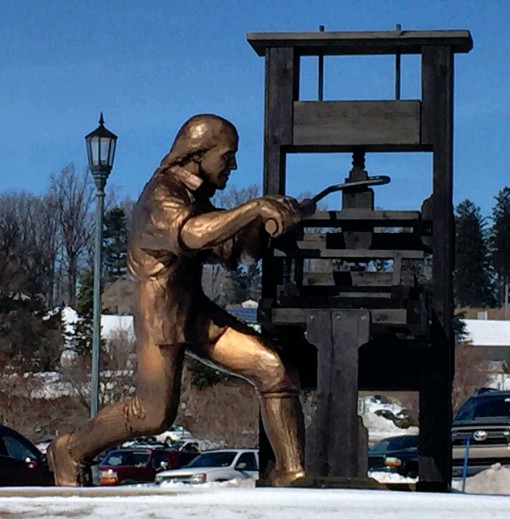
- 1452 - Gutenberg and printing press - Benjamin Franklin would make use of this 300 years later.
- 1453 -Constantinople falls, gunpowder and cannons, trade routes closed, a way was needed to the orient (east).
- 1492 - Columbus, and others, set out to find the new ways to get spices.
- 1517 - Luther and the Reformation
No one since 200 B.C. really believed the earth was flat - a myth propagated used to make Christians appear stupid.
 |
Details are left as a future topic.
|
89. Early days of Martin Luther
- Hard life as a youth
- Trained to be a lawyer
- Plague, thunderstorm, turned to the monastery.
- Catholic church was civil and religious authority
90. Luther as a monk
- Devoted and dedicated.
- Sent to Rome on pilgrimage
- Saw the real Catholic Church
- Luther becomes professor of Theology
- Studied the Bible in Hebrew and Greek.
- Noted discrepancies.
- Renaissance, Michaelangelo
- C.S. Lewis: The Renaissance never happened (as popularized as the Dark Ages before)
91. Catholic Church
The Catholic Church had issues with debt from extravagant spending not related to the purpose of the church.
Such extravagances tend to happen in human organizations where there is no accountability for those in charge of the organization. This attitude filters down throughout the organization.
- Ross Perot as presidential candidate in 1992: Quality starts at the top.
- My reply at the time: Lack of quality starts at the top.
When an inferior person (leader) is at the top of any part of the organization, they tend to get less capable people to work for them, and so on. It effects the entire organization.
92. Luke 1:14 Naive about the nativity
Luke 1:14 And thou shalt have joy and gladness; and many shall rejoice at his birth. [kjv]
και εσται χαρα σοι και αγαλλιασις και πολλοι επι τη γεννησει γενεσει αυτου χαρησονται [gnt]
… gaudium … exultatio … nativitate … gaudebunt [v]
The
first "
live nativity" was done by St. Francis of Assisi (1181-1226) in
1223 in Greccio in central Italy.
Today, many churches have a "
live nativity" reenactment.
The Latin
"nativitas" ≈ "birth, nativity". From this we get
"native",
"nativity",
"naive", etc. The corresponding ancient Greek word
"γέννησις" ≈ "producing, beginning, birth"and is the source of the English word
"genesis".
93. Acts 3:6
KJV: Then Peter said, Silver and gold have I none; but such as I have give I thee: In the name of Jesus Christ of Nazareth rise up and walk.
Greek: ειπεν δε πετρος αργυριον και χρυσιον ουχ υπαρχει μοι ο δε εχω τουτο σοι διδωμι εν τω ονοματι ιησου χριστου του ναζωραιου εγειραι και περιπατει
94. Acts 3:7
KJV: And he took him by the right hand, and lifted him up: and immediately his feet and ancle bones received strength.
Greek: και πιασας αυτον της δεξιας χειρος ηγειρεν αυτον παραχρημα δε εστερεωθησαν αυτου αι βασεις αυτου και τα σφυρα σφυδρα
95. Ideas
- Luther: Salvation between you and God, not between you and the Church.
- Pope Leo of Catholic Church, had debts, love of money.
96. Raising funds
Pope Leo X (Catholic Church) had huge debts and a love of money.
The Catholic Church used indulgences in a manner somewhat similar to how colleges and universities raise money today: If you donate a large amount of money for a building, the building will be named after you.
No one wants to donate money for routine maintenance. How might one provide name recognition for that?
97. Indulgences and selling forgiveness
Pope Leo X (Catholic Church) had huge debts and a love of money.
The Catholic Church used "
indulgences" as a way to print money, offering forgiveness for sin by a payment. One could even buy forgiveness before the sin was done.
- Tetzel: "As soon as money in the coffer rings, the soul from purgatory's fire springs." (marketing slogan)
- Luther: "Church had no right to sell forgiveness. People's lives and eternity are at stake."
[Luther found and then hid again, preemptive pardons]
98. The just shall live by faith
The phrase "
The just shall live by faith" appears in Habakkuk but also appears three times in the
GNT (Greek New Testament) in letters written by Paul. Each part applies to one of the books.
- "the just": Romans
- "shall live": Galatians, Galatia, people of Gaul, Celts, Celtics, clover, etc.
- "by faith": Hebrews
The "
just" is the same word as "
righteous", those who are "
right" by God.
- The righteous shall live by faith.
The meaning that Martin Luther acquired from these verses led him to start what is called the "
Reformation".
99. Social media post gone viral
Many people are familiar with Facebook as a social media platform.
Sometimes, when a post (written entry) to a social media account is noticed by a lot of other people, and causes an uproar or panic, the post is said to have gone viral, as in a virus spreading or a nuclear chain reaction.
Did you hear about the social media post gone viral that directly caused war on a large scale for many years?
100. Martin Luther
Martin Luther (German priest, theologian, author and hymn-writer) was a German priest, theologian, author and hymn-writer.
He is credited with the spark that started the Protestant Reformation.
His 95 Theses were tacked to the wall on All Saint's Eve in 1517.
The Lutheran Church is named for Martin Luther.
101. Hidden in the castle
Matthew 13:44 Again, the kingdom of heaven is like unto treasure hid in a field; the which when a man hath found, he hideth, and for joy thereof goeth and selleth all that he hath, and buyeth that field. [kjv]
|
|
|
|
Martin Luther
|
Frederick III
|
A fundamental concept of
information (and
statistics) is that of what is known by who at a certain point in time.
Definition:
Information is
data that is recognized from a certain point of view (e.g., by an intelligent entity).
When Frederick III, Elector of Saxony, wanted to hide Martin Luther, he had him hid by others in one of his castles (without telling him where) so that he could say that he truthfully say that he did not know where he was. He could find out where Martin Luther was, but he did not actually know where Martin Luther was.
Was Martin Luther, as a "
treasure",
"found" and then
"hid" in a
"field" (the world)? In the historical interpretation, the parable of the treasure in a field fits with the time of the Reformation.
102. Gott mit uns
Matthew 1:23 Behold, a virgin shall be with child, and shall bring forth a son, and they shall call his name Emmanuel, which being interpreted is, God with us. [kjv]
ιδου η παρθενος εν γαστρι εξει και τεξεται υιον και καλεσουσιν το ονομα αυτου εμμανουηλ ο εστιν μεθερμηνευομενον μεθ ημων ο θεος [gnt]
… Emmanuhel … Nobiscum Deus [v]
… Emanuel … Gott mit uns. [lu]
… Еммануил… с нами Бог. [rus]
Martin Luther used the German phrase
"Gott mit uns" ≈ "God with us" in Matthew 1:23 in his famous German Bible,
NT (New Testament) (from Greek) in 1522,
OT (from Hebrew) in 1534.
The German Army used this phrase for many years. The Third Reich (1933 to 1945) used it before and during World War II.
The Russian Army (and others) used a similar phrase (in their language) at various times.
103. Matthew 1:23
KJV: Behold, a virgin shall be with child, and shall bring forth a son, and they shall call his name Emmanuel, which being interpreted is, God with us.
Greek: ιδου η παρθενος εν γαστρι εξει και τεξεται υιον και καλεσουσιν το ονομα αυτου εμμανουηλ ο εστιν μεθερμηνευομενον μεθ ημων ο θεος
Luther: Siehe, eine Jungfrau wird schwanger sein und einen Sohn gebären, und sie werden seinen Namen Emanuel heißen, das ist verdolmetschet, Gott mit uns.
104. German Christkind
With the date change from December 5 to December 24 (Christmas Eve), many Christian leaders of Europe, especially Martin Luther, did not want Saint Nicholas overshadowing Jesus at Christmas. In Germany parents were to use terms like "
Christkindl".
The German word
"das Kind" ≈ "the child". A "
kindergarten" is a "
garden for children". The lowercase "
L" at the end of "
Christkindl" is a form of
diminutive.
Going through Dutch, "
Kriskind" becomes "
Kris Kringle".
[grammatical gender]
105. Martin Luther and the strawman
Martin Luther is credited with the first use of the term "
strawman" (in German) for such a line of reasoning. In general terms, he pointed out that the Catholic Church had set up a strawman argument against him and then knocked it down and claimed it had discredited him.
(I could not find a definitive reference for this.)
106. Hymns
107. From highest heaven
The German Martin Luther is often attributed with the words to the song "
Away in the manger". He never wrote the song.
Martin Luther wrote many songs, one of which is "
Von Himmel hoch, da komm ich her", which in English is "
From highest heaven, I come here".
108. Jesus coming back
What did Martin Luther say he would do if Jesus were coming back tomorrow?
plant a tree
109. Reformation
During the Reformation, Martin Luther authored many songs and carols and promoted their use in religious settings.
John Wesley and
Martin Luther on bar melodies for hymns: "
the devil should never have all the good tunes".
Discuss: Is some music "
of the devil"? Explain.
110. Martin Luther
As a monk and professor of Theology at his Abby, Martin Luther visited Rome in 1510 when Michelangelo was busy creating magnificent works of art to decorate the palaces and cathedrals of Rome.
Luther's idealistic and Bible-based expectations of what he expected to see conflicted with the corruption and extravagance he saw in Rome.
111. Martin Luther and James: The straw epistle
Martin Luther (German priest, theologian, author and hymn-writer) called the Epistle of James a "
straw" epistle because it had
"keine evangelische Art" ≈ "no evangelical character". To avoid advocating that epistles such as "
James" be removed from the canon, Luther created a two tiers of epistles. James was in the lower tier. The disputed books of Luther included the following: Hebrews, James, Jude, Revelation.
The book of
James is filled with logical errors, uses word meanings that did not develop until later, uses words attributed to Plutarch some 50 or more years later, uses scientific terms in inappropriate ways as if to impress others with his knowledge, and, most importantly, advocates positions that are the opposite of the teachings of Christ. Why would the church approve such a letter?
The point James makes about faith and works is an example of the converse error. Yet, many will ignore this obvious error and learn the "
talking points" to try to reconcile what Paul says (which follows from what Jesus says) and what James says (which is a good example of the converse error).
 |
Details are left as a future topic.
|
112. Job 5:3 Through the diet
Job 5:3 I have seen the foolish taking root: but suddenly I cursed his habitation. [kjv]
εγω δε εωρακα αφρονας ριζαν βαλλοντας αλλ ευθεως εβρωθη αυτων η διαιτα [lxx]
The English word
"diet" comes, through French, from the Latin word
"diaeta" ≈ "diet, regimen" (Medieval "
assembly") and which comes from the ancient Greek word
"δίαιτα" ≈ "way of living, residence, health regimen" and related meanings.
What was the main food at the
Diet of Worms in 1521? When Luther would not recant, the Pope declared Luther a heretic in the
Edict of Worms. This was the famous "
here I stand" declaration by Luther.
113. Thank you
114. End of page